
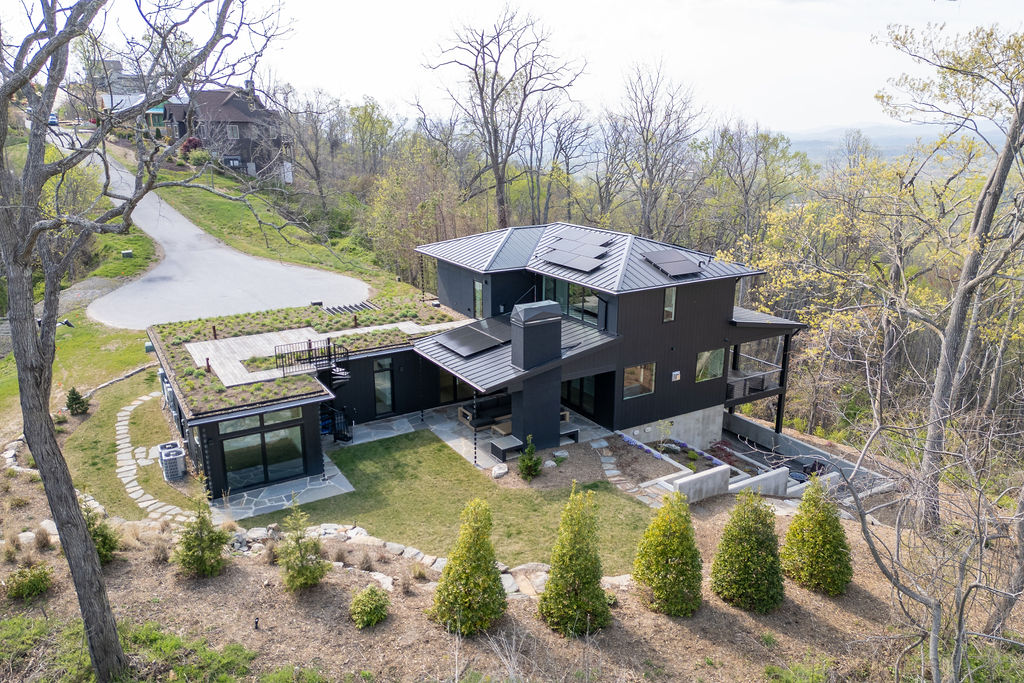
Building on a Steep Lot in Asheville, NC: What to Expect when Building a Custom Home
Published by Assembly Architecture + Build | assemblyab.com | Asheville and Western NC
If you’ve fallen in love with a hillside lot in Asheville, you’re not alone. The views from a steep site in the mountains of Western North Carolina can be extraordinary. And the reality of building on that lot? It’s manageable. But only if you go in with the right information, the right team, and realistic expectations about what it will cost.
At Assembly Architecture + Build, we’ve built homes across some of the most challenging terrain in the region. Hillside lots, rocky ridges, long driveways carved into the side of a mountain. We know these sites well, and we believe honest information upfront is the best thing we can give a prospective client.
This guide covers everything you need to know about custom home building on a steep lot in Asheville, from local regulations and foundation options to what site complexity actually adds to your budget.
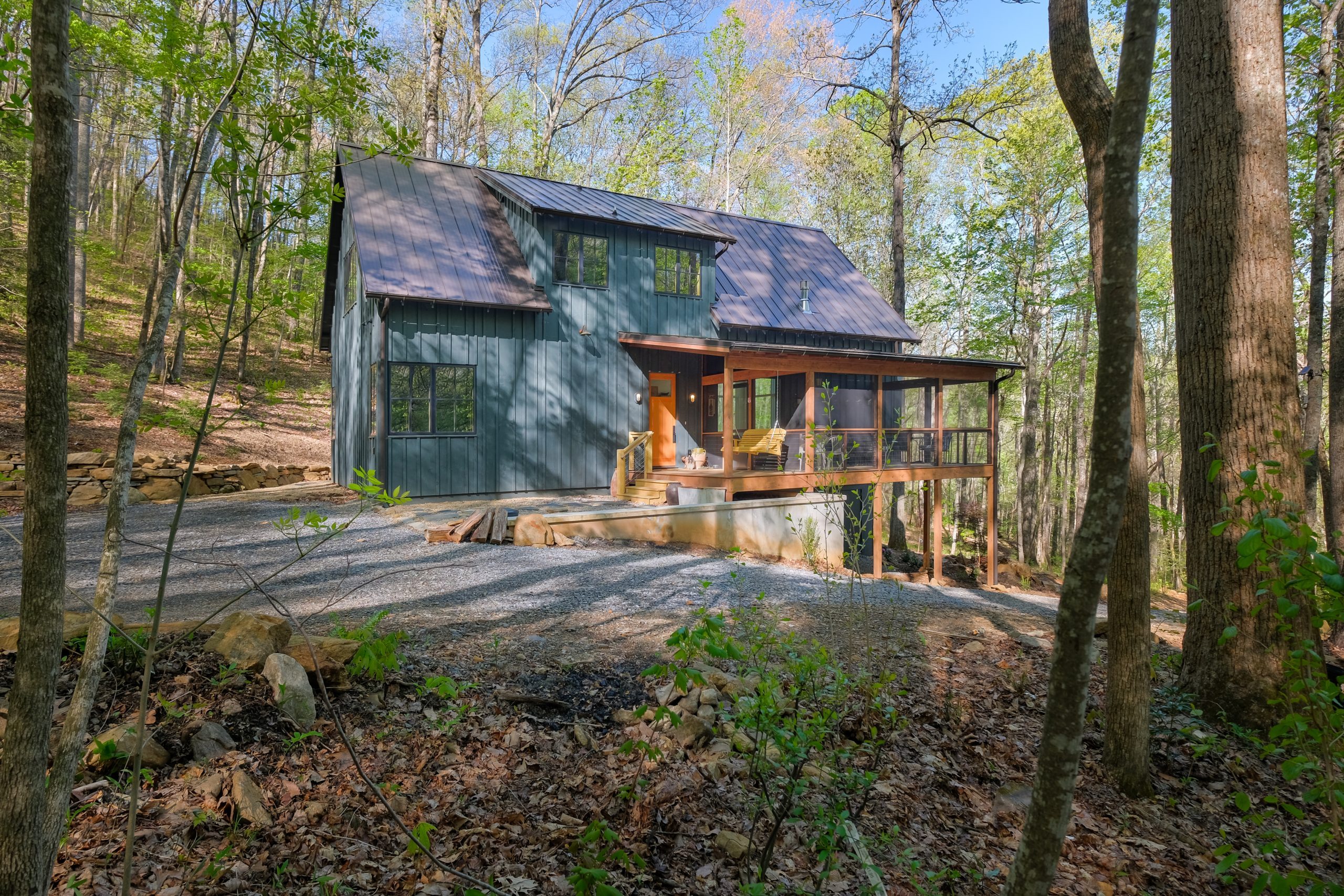
This Asheville mountain home is built into the steep slope
Why Steep Lots Are So Common in Asheville
Asheville sits in a mountain basin at roughly 2,100 feet elevation, surrounded by the Blue Ridge and Black Mountains. Flat land here is uncommon, especially if you’re looking for incredible views. The parcels that tend to come available often have steep, large slopes, especially in West Asheville, North Asheville, Weaverville, Black Mountain, or up a remote Madison County hollow.
This isn’t necessarily a problem. Some of our most interesting custom homes have been built on technically difficult sites. Understanding the changes before you make an offer on land is the difference between a smooth project and a costly surprise.
What Asheville’s Regulations Say About Steep Slopes
Asheville has specific rules governing construction on steep lots. Within the city limits, the Steep Slope and Ridgetop Development Ordinance applies to lots with 15 percent slope or more. That ordinance regulates grading, impervious surface coverage, retaining walls, and screening requirements designed to minimize the visual and environmental impact of building on hillside terrain.
Unincorporated Buncombe County has its own Steep Slope Zoning Overlay, which you can locate through the county GIS system. The Town of Black Mountain separately enforces an Erosion Prevention and Slope Protection Ordinance. For lots with a 35 percent or greater slope, or lots that fall within a high or moderate hazard area on the Buncombe County Slope Stability Index map, a geotechnical report is required before any ground disturbance can begin. A second engineer certification is required after the home is built, confirming the recommendations were followed.
If you’re working with a design build Asheville firm that has experience on mountain sites, none of this is unfamiliar territory. We navigate these requirements regularly. But if you’re buying land without a builder or architect already engaged, knowing the regulatory landscape can save you from purchasing a parcel that’s far more complicated, or in some cases more restricted, than it first appears.
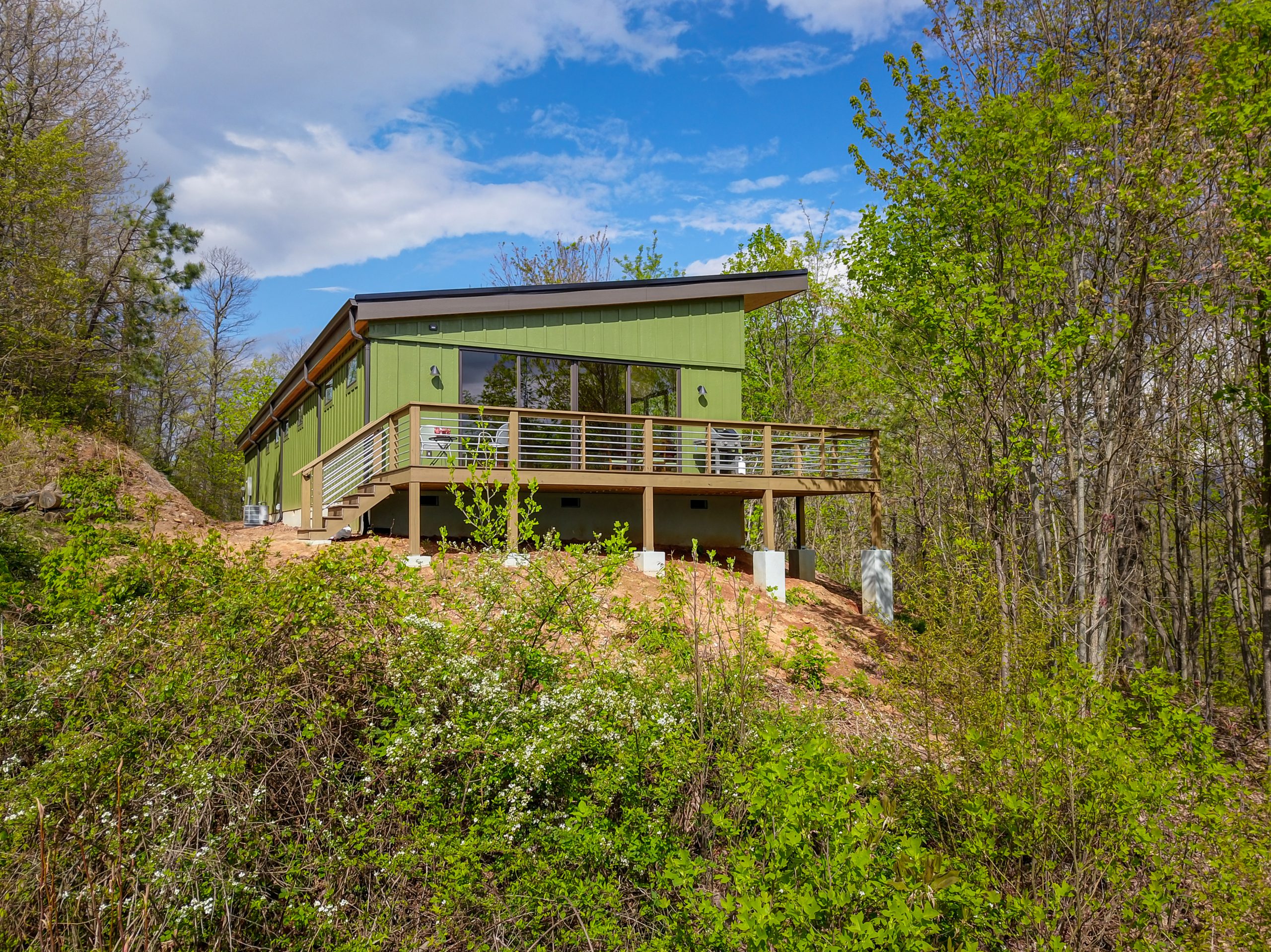
Foundation Options for Steep Sites
Foundation design on a sloped lot in Western NC is one of the biggest cost variables in the entire project. The right approach depends on the degree of slope, the soil conditions, and the design of the home itself. Here are the most common options Asheville architects use on challenging terrain.
Daylight or Walkout Basement On moderately sloped lots, a basement foundation is often the most cost-effective solution. The home is stepped into the hillside, with the lower level exposed on the downhill side. This approach creates usable below-grade square footage, which tends to be more cost-effective per square foot than above-grade space. Many of Assembly AB’s hillside mountain homes use this strategy.
Pier and Grade Beam On steeper sites, a system of drilled concrete piers anchored to bedrock or stable bearing soils, connected by grade beams, is often the preferred approach. This minimizes the amount of soil disturbance and grading required, which matters both for cost and for erosion control on sensitive mountain terrain.
Helical Piles In certain soil conditions, helical piles, which are steel shafts screwed into the ground mechanically, offer a faster and less disruptive alternative to drilled concrete piers. They’re particularly useful when access is limited and large equipment can’t easily reach the site.
Crawl Space For more gentle slopes, a crawl space foundation can work well and is less expensive than a full basement. However, moisture management is critical in Western NC’s climate, and proper waterproofing and ventilation have to be designed carefully.
The foundation decision isn’t made in isolation. As a design build Asheville firm, we evaluate foundation options alongside the home’s architectural design from the beginning of the project. That integrated process is one of the clearest advantages of working with a design-build team versus hiring an independent architect and builder separately.
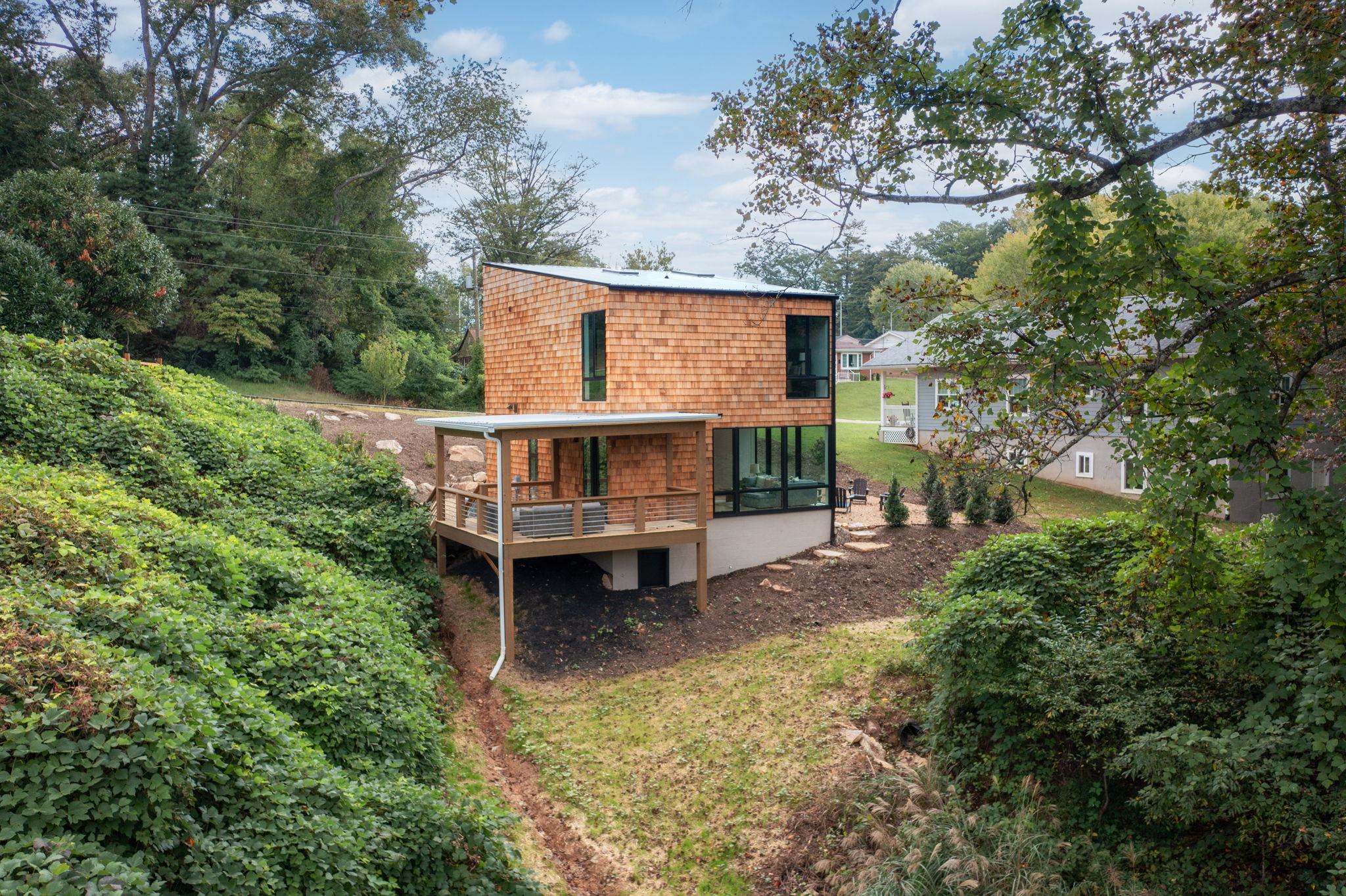
Haith House from afar.
Retaining Walls, Grading, and Site Work Costs
Nearly every steep lot in Western NC will require retaining walls. They hold back the hillside, protect the building pad, manage stormwater, and define outdoor living areas. The cost and complexity of those walls varies significantly.
Dry-stacked boulder walls are common and beautiful in this landscape. Engineered concrete or block walls are required in many situations, particularly for walls taller than four feet, which in Buncombe County and the City of Asheville must be engineered by a licensed structural engineer.
On a steep lot, site work and grading can easily add $40,000 to $150,000 or more to your total project budget, depending on the severity of the slope, the length of the driveway, rock conditions, and the extent of stormwater infrastructure required. If a lot has particularly difficult access for large equipment, or if blasting is required to remove bedrock, costs climb further.
This is one reason why, in custom home building in Asheville, the advertised per-square-foot price of a home rarely tells the full story. Two identical 2,500-square-foot homes, one on a flat lot and one on a 30 percent slope, can differ by $100,000 to $200,000 in total project cost before a single wall goes up.
Driveways on Steep Lots
The driveway is often the most underestimated cost on a hillside site. Long driveways on steep terrain require grading, compaction, drainage infrastructure, and sometimes engineered walls or cut-and-fill work just to establish a safe grade. Most building codes limit driveway grade to 14 to 20 percent, which means a long, steeply rising lot may require a switchback design that adds significant footage.
In Asheville and surrounding areas, a simple driveway on a challenging lot might cost $15,000. A long, complex driveway with retaining infrastructure on a steep site can reach $60,000 or more.
What Makes a Steep Lot Worth It
Steep lots in Asheville are often significantly less expensive to buy than flat lots with comparable square footage and proximity to town. The discount on the land can more than offset the additional site work costs, particularly if you go into the project with accurate numbers.
Beyond cost, the sites themselves are often the most beautiful. A home perched on a ridge above West Asheville with a clear view to the south, designed to capture that orientation for passive solar heating and cooling, natural light, and a connection to the mountain landscape around it, is the kind of home that’s nearly impossible to achieve on a flat suburban lot.
Assembly AB’s work is rooted in sustainable design and an honest engagement with the landscape. We don’t fight the terrain. We design with it.
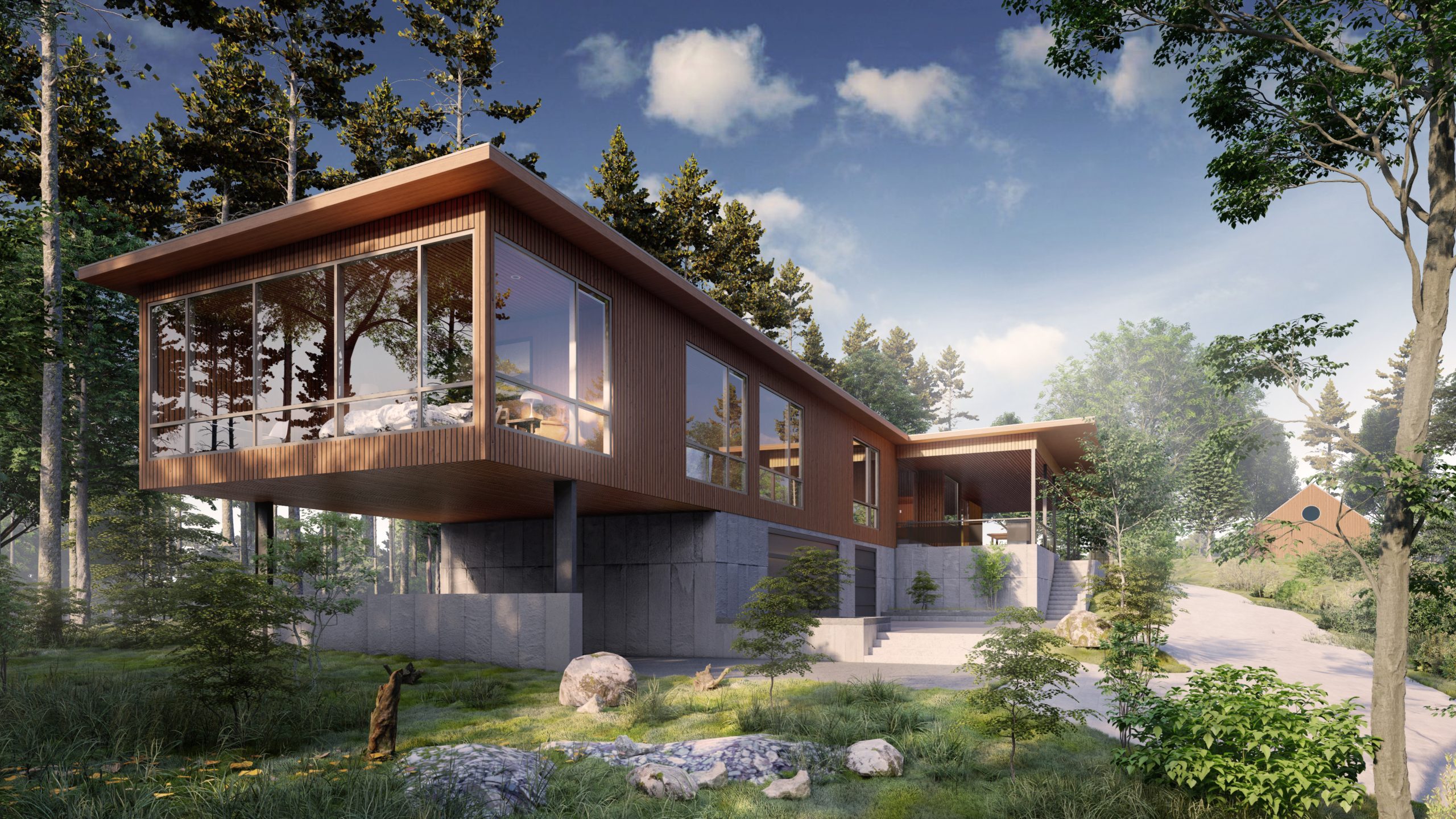
The initial elevated design for our Ramble house.
Why Design-Build Matters More on Challenging Sites
On a flat lot with straightforward conditions, the traditional model of hiring an architect separately from your builder can work reasonably well. On a steep, complex mountain site, it tends to break down.
Here’s why: when an architect designs a home in isolation, without constant input from the construction team, the design may call for a foundation approach, a grading strategy, or a structural system that is technically buildable but far more expensive than an alternative that an experienced builder would have flagged early. By the time those conflicts surface, you’ve paid for design work that has to be substantially revised.
In the design build Asheville model, the architect and builder work together from the first site visit. The foundation decisions inform the floor plan. The grading strategy shapes where the entry is and how the home meets the ground. The structural approach is priced in real time as the design develops. The result is a home that was designed to be built on that specific piece of land, at a budget that was established before the design was finalized.
For steep lots in Western North Carolina, that integration isn’t a luxury. It’s the approach that actually works.
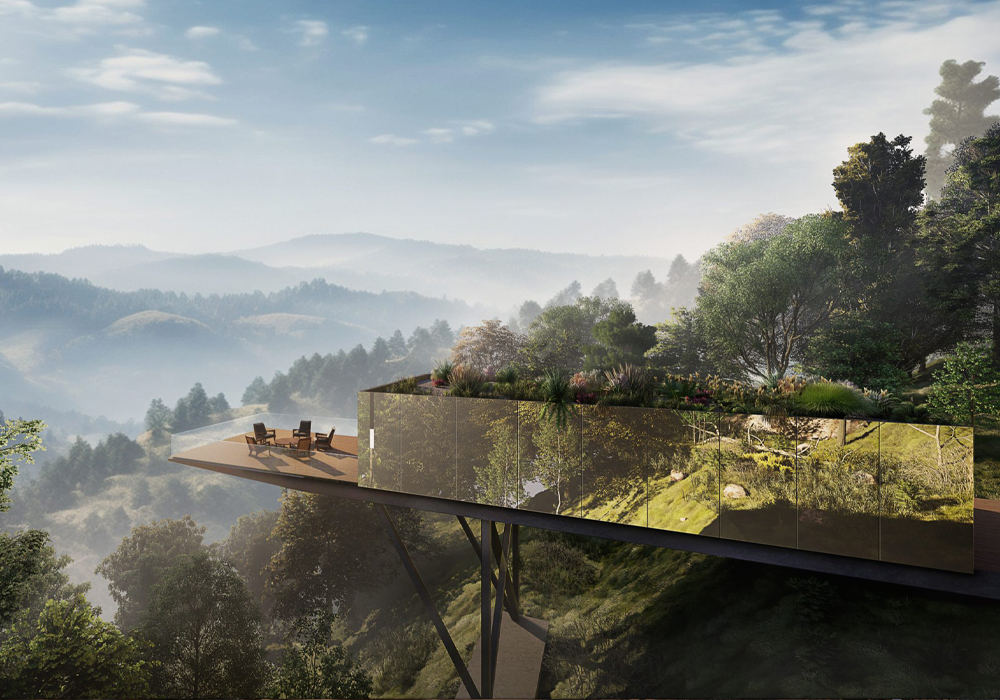
Panoramic views of the blue ridge mountains can be seen from the deck of this home design.
Assembly A+B’s Experience on Difficult Sites
As Asheville architects with a design-build practice, we’ve worked on sites that other firms have declined. Long ridge lots with limited equipment access. Properties where the buildable envelope was a fraction of the total acreage. Sites that required geotechnical engineering, custom foundation systems, and substantial stormwater infrastructure just to get to the foundation pour.
We’ve done that work, and we know what it costs. When a client comes to us with a challenging lot, we give them honest numbers early, and we design homes that are worth what they cost.
If you’re considering custom home building in Asheville on a steep or complex site, we’d love to walk the land with you before you make an offer. That conversation costs nothing, and it tends to change the project for the better.
Assembly Architecture + Build is a design-build firm based in Asheville, NC, specializing in sustainable custom homes across Western North Carolina. To start a conversation, visit assemblyab.com/contact.

Ross Smith is both a licensed architect and contractor and founder of ASSEMBLY Architecture + Build. Ross received his degree in architecture from Yale University where he graduated with an award in design excellence. He now designs and builds sustainable, unique custom homes in Asheville, NC.

