
Renovating vs. Building a New Home in Asheville: Which Costs More?
One of the most common, often incorrect, assumptions we hear from people looking for a home in Asheville is: “We’ll just buy an older house and gut it. It must be cheaper than building new.”
This seems logical to a first time homeowner. The house is already standing. The foundation is poured, the roof is on, the utilities are connected. Surely starting with all of that saves money?
In our experience as a design-build firm, the answer is almost always no. A full gut renovation costs about the same per square foot as building a new custom home. The difference is in the starting price. What you pay for land vs an existing house is very different, and this is why renovation is often the most expensive path.
Here’s our actual numbers and why we almost always recommend building new unless you’ve fallen for a specific house or neighborhood.
The Short Answer: Same Cost Per Square Foot, Different Starting Price
When you compare apples to apples, the building prices of a full gut renovation and a new custom home land in roughly the same range per square foot. However, the reason renovations are often more expensive is because you are paying for the existing structure, even if you will need to completely gut it. At Assembly, our average for new custom homes is about $335 per square foot. A gut renovation of comparable quality and finish will typically fall right in that same neighborhood.
So if construction costs are a wash, where does the gap come from?
The price of what you’re starting with.
- To build new, you buy a lot. In the Asheville area, a buildable lot often runs around $75,000-$200,000.
- To renovate, you buy a house. Renovations often require a full gut which can easily cost $300,000 to $500,000, because you’re paying for a structure, even if you’re about to tear it apart and rebuild it from the inside out.
In other words, if a gut renovation costs $350 per square foot and a new build costs $350 per square foot, you end up with a home of the same quality and feel either way. But with the renovation, you’ve paid an additional cost for the existing structure.
A Side-by-Side Example
Here is a side by side example of a building vs gut renovating a 2,000 square foot home.
| New Build | Existing House Gut Renovation | |
| Upfront cost for home site | ~$170,000 (for lot) | ~$300,000 to $500,000 (for existing home) |
| Construction/renovation costs at ~$335/sf | ~$670,000 | ~$670,000 |
| Estimated total | ~$840,000 | ~$970,000 to $1,170,000 |
They both have the same square footage and level of finish- and there is a difference of $130,000 to $330,000. That’s before any of the surprises that renovations are known for.
(These figures are illustrative. Every lot, house, and design is different. For a full breakdown of new construction costs, see our guide: What Does It Cost to Build a Custom Home in Asheville, NC? (2026).
Gut Renovations Cost More Than People Expect
Even setting the purchase price aside, renovation carries its own set of costs that new construction simply doesn’t have. Here’s what tends to drive the budget up.
Demolition Isn’t Free
Gutting a house is expensive. Taking a home down to the studs means labor, equipment, dumpsters, hauling, and disposal fees. You’re paying to remove materials before you pay to install new ones.
Re-Engineering the Existing Structure
When a renovation includes a new floor plan (most full guts do), walls move. Moving walls often means moving loads. That requires structural engineering to figure out how the existing framing, beams, and foundation can support the new design, and then the work to reinforce or replace what can’t.
Designing a new floor plan inside an old shell is genuinely harder than designing one from scratch. On a new build, our architects can place structure exactly where the design needs it. In a renovation, every decision has to work around what’s already there.
Sagging Beams and Out-of-Level Floors
Older homes settle. Beams sag, joists deflect, and floors drift out of level over decades. You may not notice it walking through, but your installers will.
Tile, cabinetry, countertops, and new flooring all need a flat, level, square surface. When the bones of the house aren’t level, those surfaces have to be corrected first, through shimming, sistering joists, replacing beams, or reframing sections of floor. That correction work is slow, labor intensive, and expensive, and it’s rarely fully visible until the walls and floors are opened up.
Foundation Problems
This is the big one. If an existing foundation has settled or failed, fixing it can mean lifting and leveling the house. Foundation repair is among the most costly and disruptive parts of any renovation, and it’s work that adds nothing you’ll ever see. You’re simply paying to get back to a sound starting point that a new build gives you on day one.
The Unknowns Behind the Walls
With new construction, what’s in the plans is what gets built. With a renovation, there’s always a layer of uncertainty until demolition reveals what’s really there: rot, toxic mold, outdated wiring, old plumbing, previous owners’ DIY “fixes.” Each discovery can mean a change order and a schedule delay.
What You Get With New Construction
Building new on a well-chosen lot gives you a clean slate:
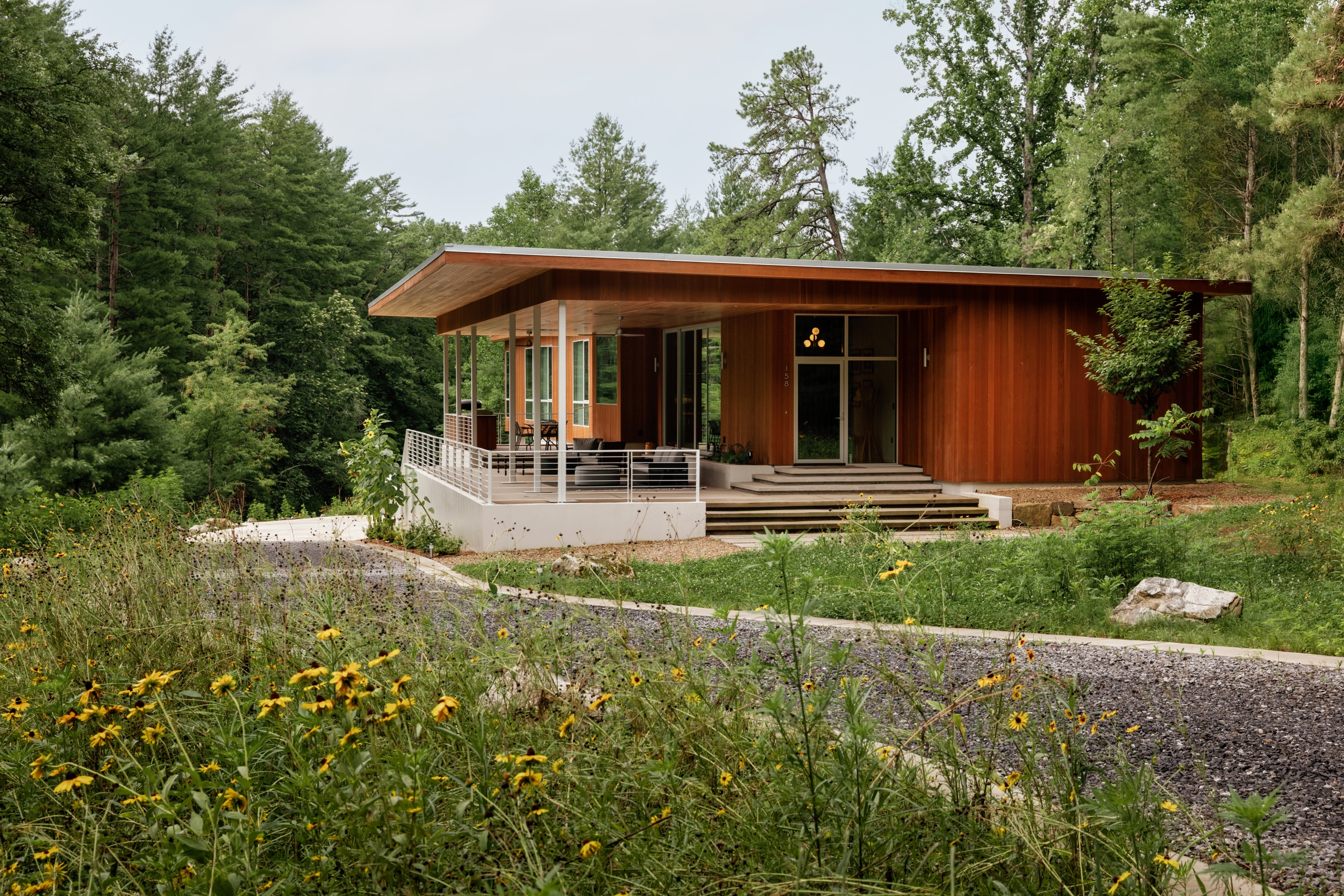
- A home design shaped around your life, not around existing walls and beams
- A sound, level foundation and structure from the start
- Modern, efficient systems designed together rather than retrofitted
- Better opportunities for sustainable design, including orientation for passive solar, high-performance insulation, and an airtight building envelope that’s difficult to achieve in an older shell
- A more predictable budget and timeline, with far fewer surprises
As a design-build firm, Assembly has our architects and builders working together from the first sketch, so the design, engineering, and cost estimates stay aligned the whole way through.
If you don’t have land yet, our guide on how to choose land in Asheville for a sustainable custom home is a good place to start. If you already own a property, see Build on Your Lot in Asheville, NC.
When Does Renovating Make Sense?
Renovation isn’t always the wrong choice. It just shouldn’t be chosen because people assume it’s the budget option. We’d recommend renovating when:
If you’re in love with the neighborhood.
Some Asheville neighborhoods have very few buildable lots left, and an existing house may be the only way in.
If you’re in love with an existing house.
If a home has historic character, a special story, or architectural details you couldn’t recreate, preserving it can be well worth the premium.
If either of those is true, go in with eyes open: budget for the purchase price plus full construction costs, and build in a healthy contingency for what you’ll find once the walls come down.
If neither is true, building new is usually the less expensive and less stressful path to the same quality of home.
Explore your ideas with us for free
Every project is different, and sometimes the right answer depends on a specific property. If you’re weighing whether to renovate an existing home or build new in Asheville or Western North Carolina, we’re happy to walk through the numbers with you, look at a property you’re considering, and help you understand what each path would really cost.
Contact us here to schedule a free consultation.

Ross Smith is both a licensed architect and contractor and founder of ASSEMBLY Architecture + Build. Ross received his degree in architecture from Yale University where he graduated with an award in design excellence. He now designs and builds sustainable, unique custom homes in Asheville, NC.

