
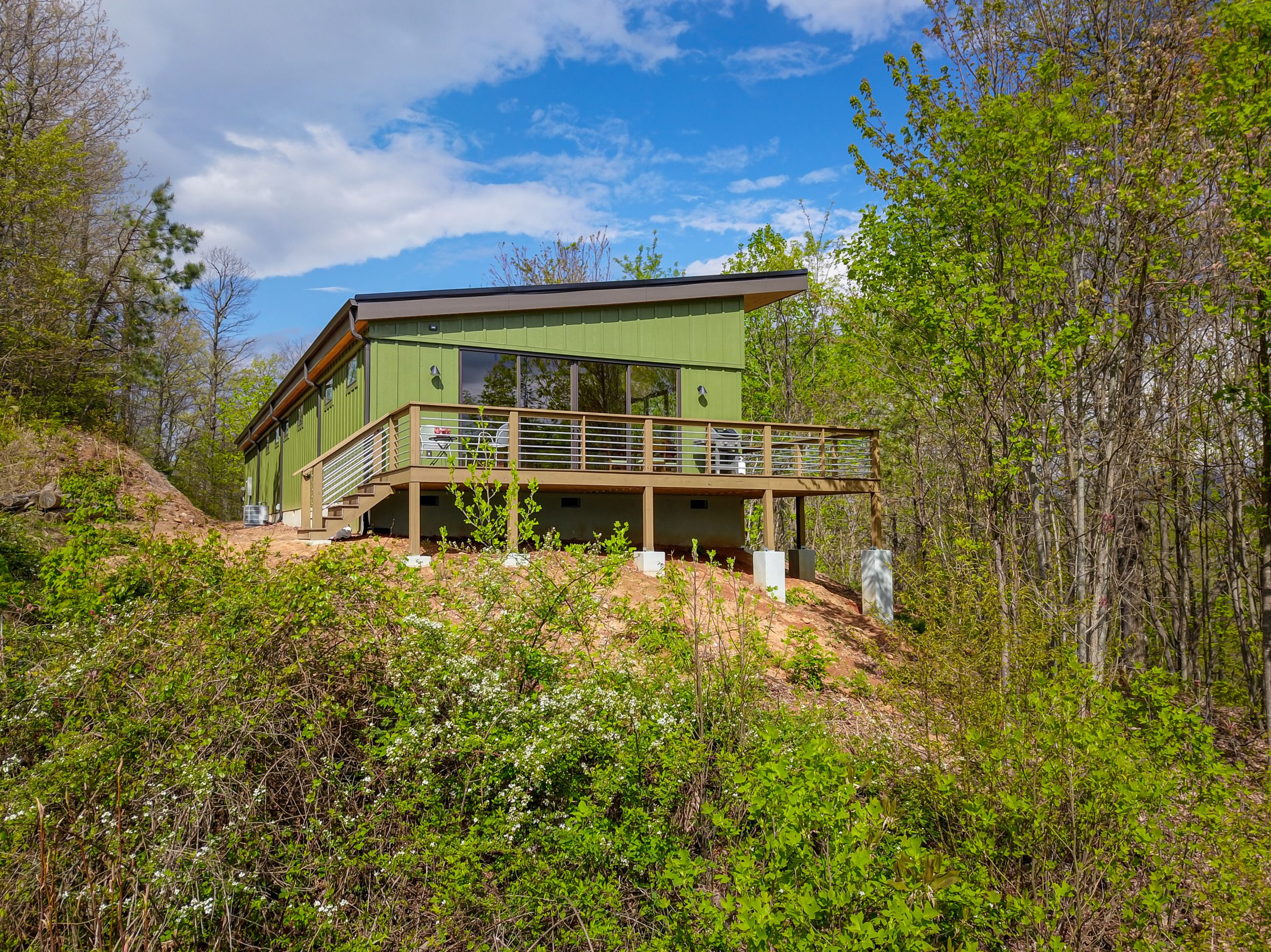
Build on Your Lot in Asheville, NC
What to Know Before You Turn Your Land into a Home
You already have the hardest part figured out. You found an incredible homesite. Maybe it’s a wooded parcel tucked into the hills above West Asheville, a sunny clearing in Fairview, or family land in Hendersonville that’s been waiting for you to build your home.
Whatever brought you here, you’re standing on the ground that means the most: land you already own, in a place you already love.
The question now is simple to ask and, in Western North Carolina, genuinely worth answering carefully: what does it actually take to build on your lot in Asheville?
At Assembly Architecture + Build, this is one of the projects we love most. Building on a client’s own land is different from building on a developer’s flat, pre-graded lot in a new subdivision. It’s more personal, and in the mountains, it’s more technical. Here’s what that process looks like, and what we look at before the first line is ever drawn. If you are interested in building with us, don’t be shy! We can have a chat here.
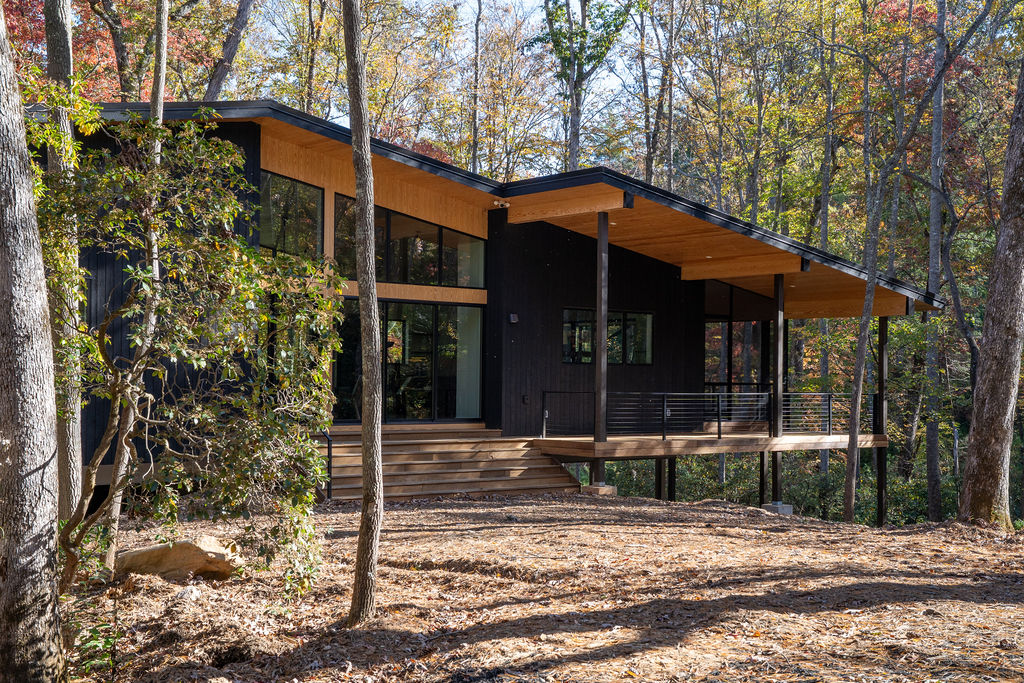 Why So Many Asheville Landowners Are Choosing to Build
Asheville’s housing market has pushed a lot of people toward the same realization: if you already own land here, building the home you actually want is often more achievable, and more rewarding, than competing for an existing house that doesn’t quite fit.
Building on your own lot means:
- You choose the orientation. You’re not stuck with wherever the last builder pointed the garage.
- You keep what you love about the land. The specific stand of oaks, the creek sound, the ridge view, the privacy, whatever it was that made you buy the parcel in the first place.
- You build for how you actually live. A home office with morning light. A mudroom for muddy trail dogs. An ADU for aging parents or rental income.
- You control the budget conversation from day one, instead of inheriting someone else’s design decisions.
The tradeoff is that building on your own lot, especially in Western NC’s varied terrain, takes more upfront thinking than buying something already built. That’s where a design-build approach earns its keep.
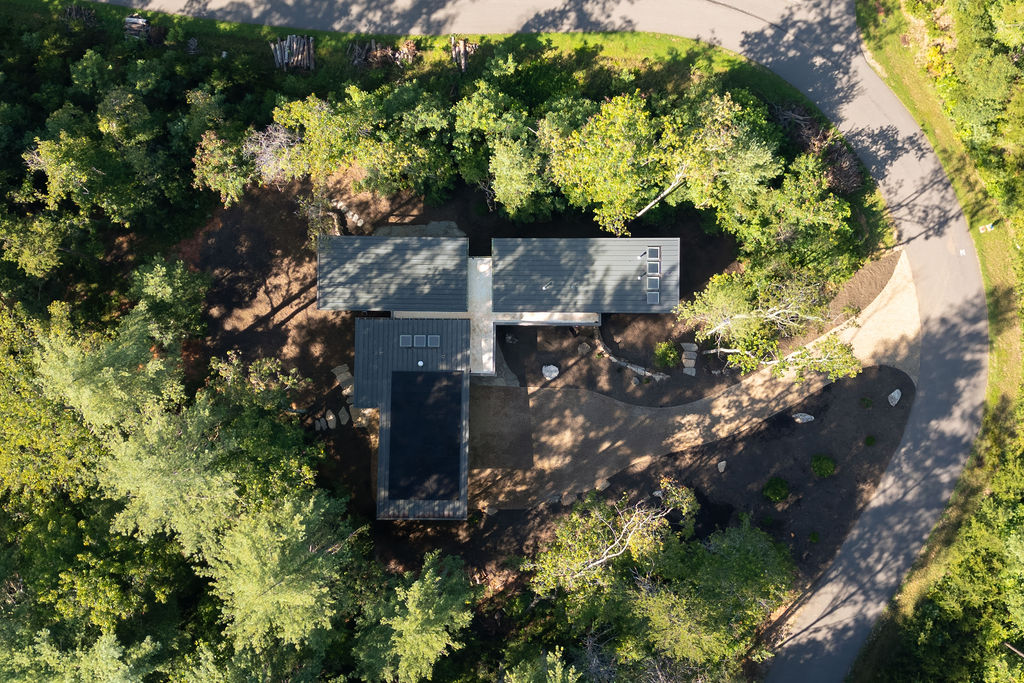
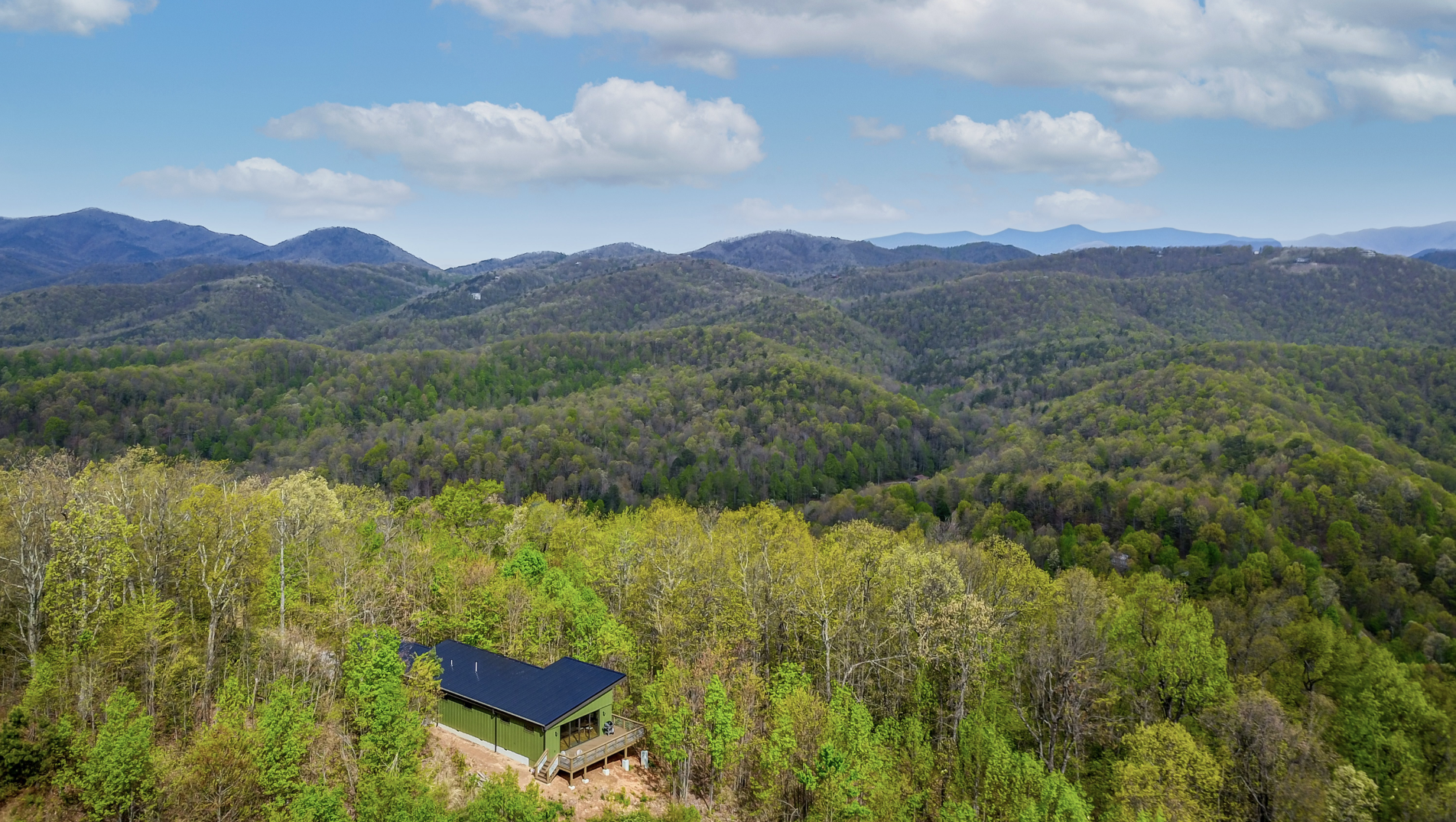
Arial view of OAK an accessible home we designed.
Step One: Understand What Your Lot Is Telling You
Every piece of land in the Asheville area has its own personality, and its own set of constraints. Before any design work begins, we walk the property with both our architect’s eye and our builder’s eye, because the two ask different questions.
Our architects are looking at:
- Solar orientation and where passive daylight and heat gain are strongest
- Views worth designing toward, and sightlines worth screening out
- How the topography suggests the house should sit, rather than fighting it
Our builders are looking at:
- Slope and how it affects foundation type, driveway grading, and site access for equipment
- Existing utility access: is there a well or public water? Septic or sewer? Power access?
- Tree cover, drainage patterns, and soil conditions that affect cost before a design is even finalized
If you’ve already owned your lot for a while, you may have observations we can’t get from a single site visit; where the yard floods after a storm, where the sun really sits in December versus July, which neighbors have talked about future plans. Bring all of it to the discussion.
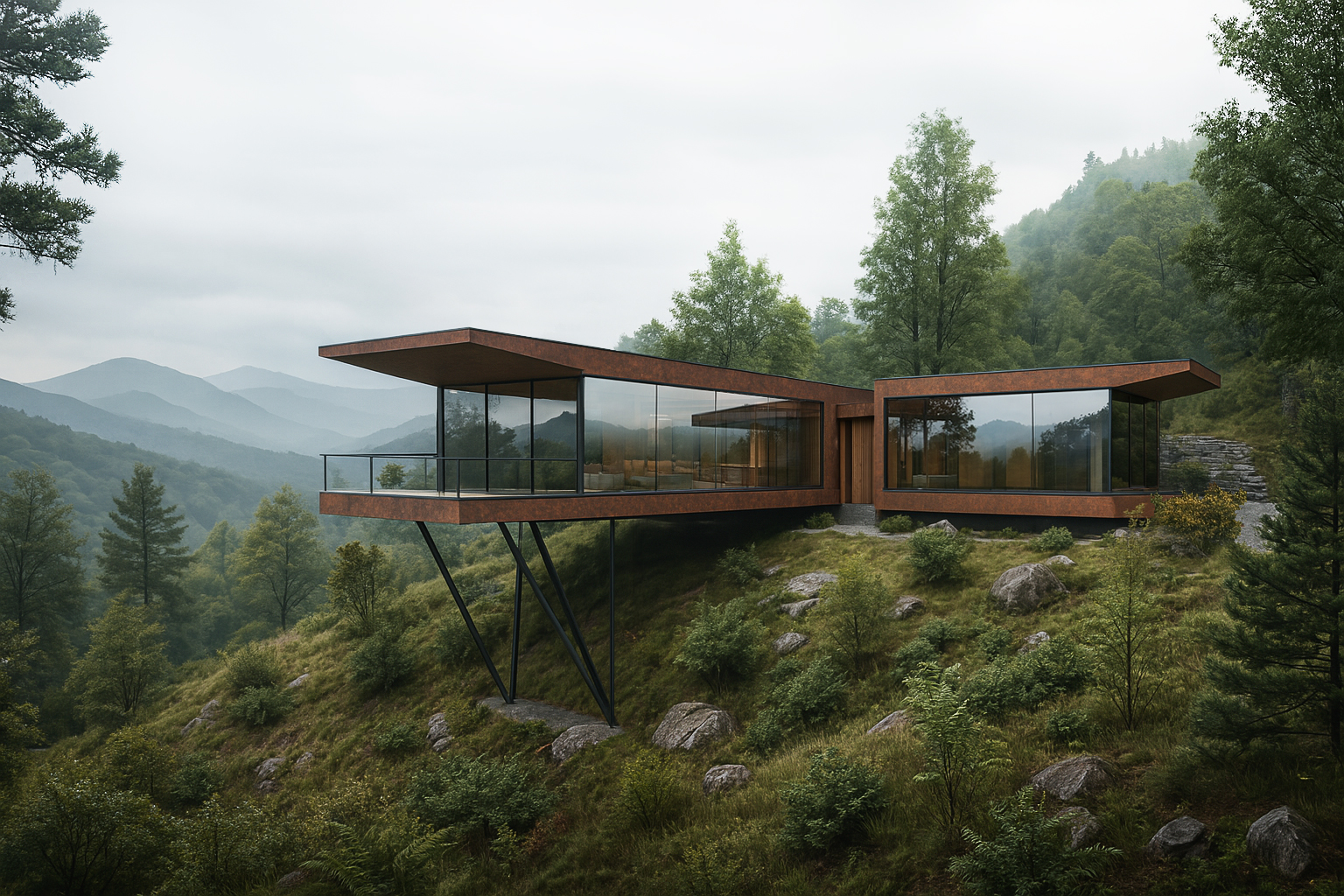
Rendering of a home in progress by Assembly Architecture + Build – a cantilevered design with expansive glass walls overlooking the Blue Ridge Mountains, built to harmonize with Asheville’s natural landscape.
Step Two: Feasibility, Zoning, and the Fine Print
Western North Carolina’s regulatory landscape is a genuine patchwork. Whether your lot falls inside Asheville city limits or in unincorporated Buncombe, Henderson, Madison, Haywood, or Yancey County changes what’s permitted, what setbacks apply, and what your septic and stormwater requirements look like.
Before design begins in earnest, we help clients confirm:
- Zoning classification and permitted uses for the parcel
- Setbacks from property lines, roads, and any streams or riparian buffers
- Whether the site falls within a flood zone
- Septic suitability (perc testing) if public sewer isn’t available
- Any deed restrictions, easements, or HOA covenants tied to the land
This step is unglamorous, but it’s the difference between a smooth permitting process and months of costly redesign later. Land that “should” be buildable on paper doesn’t always translate cleanly to what the county will approve, and we’ve navigated enough of these applications across the region to know where the friction usually shows up.
Step Three: Designing a Home That Belongs on Your Land
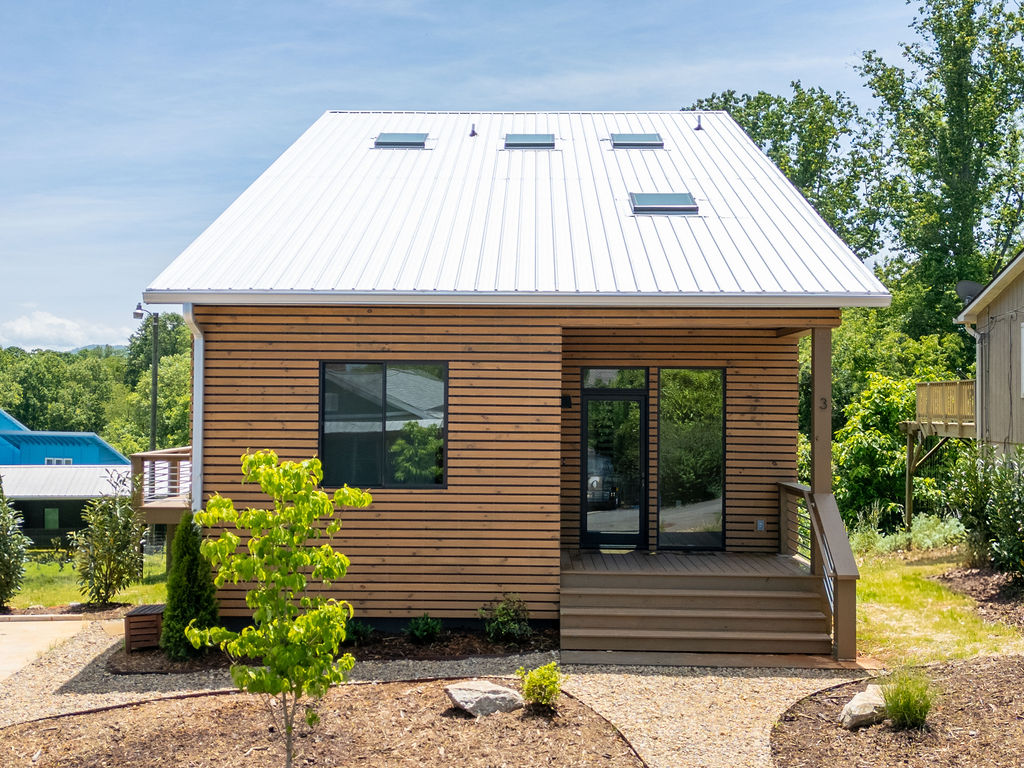
This is where building on your own lot really pays off. Instead of retrofitting a stock plan onto a site it was never meant for, we design around your specific parcel from the very first sketch.
That often means:
- Orienting the main living spaces toward the strongest light and the best views
- Working with the slope rather than against it, sometimes with a walkout lower level or stepped foundation that turns a “difficult” grade into some of the best square footage in the house
- Preserving mature trees and natural features that drew you to the land in the first place
- Designing for how utilities actually reach the site, so infrastructure costs are planned for, not discovered
Many of the inspiration photos clients bring us were designed for flat lots elsewhere in the country. Part of our job is translating that inspiration into something that genuinely works with Western North Carolina topography, without losing what you loved about it.
Step Four: Building With One Team, Not Two
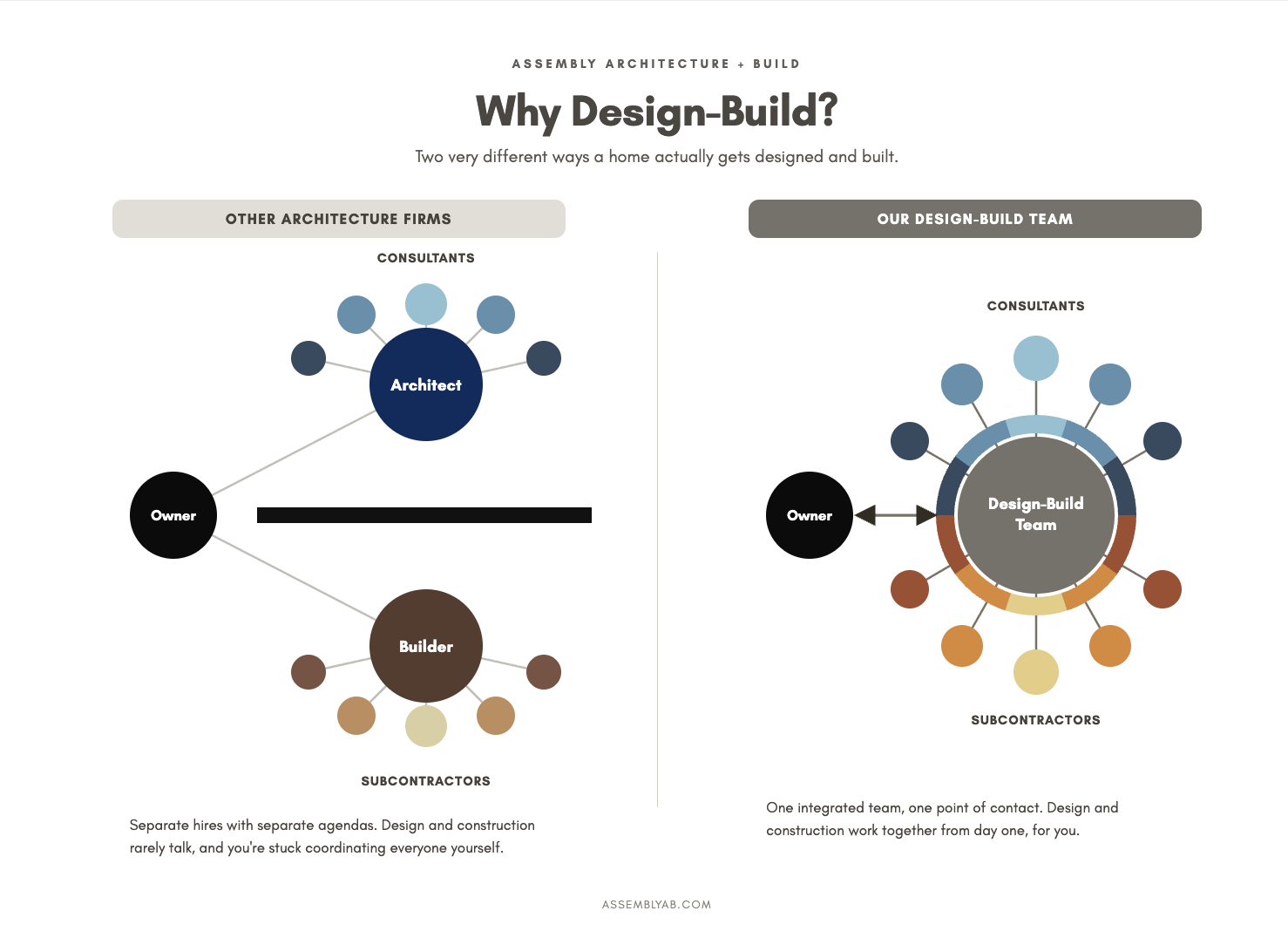
Because Assembly AB is a licensed architecture and general contracting firm, your architect and your builder are the same team from the first site walk through move-in day. For an on-your-lot project, this matters more than it might for a simpler build. You can learn more about this here.
A separately hired architect can design a beautiful home that turns out to be far more expensive to build on a sloped or septic-dependent lot than anyone expected. A separately hired contractor can build efficiently but miss design opportunities the site offered. When both perspectives are in the room from day one, site costs get priced accurately, design decisions account for construction realities, and surprises get caught on paper instead of in the field.
Custom homebuilding: How do I choose my site?
Financing a Build on Land You Already Own
One advantage worth knowing about: if you own your lot outright, its value can often be used as equity toward your construction loan, sometimes reducing the cash down payment needed to break ground. Construction-to-permanent loans are the most common financing path for this kind of project, and we’re happy to walk clients through how that process typically works alongside your lender.
Areas We Build In
Assembly Architecture + Build designs and builds on-your-lot custom homes throughout the greater Asheville region, including:
- Asheville (West Asheville, North Asheville, South Slope, East Asheville)
- Black Mountain and Swannanoa Valley
- Weaverville and North Buncombe County
- Woodfin and the French Broad River corridor
- Marshall and Madison County
- Fairview and South Buncombe County
- Hendersonville and Henderson County
- Burnsville and Yancey County
If your land sits somewhere in this footprint, we’d love to come take a look.
Ready to See the Potential of Your Homesite?
You’ve already made the biggest investment: the land itself. The next step is finding out exactly what it can support, and designing a home that makes the most of it.
We’re a licensed architecture and contracting firm based in Asheville, NC, and building on our clients’ own land is some of our favorite work. Let’s start with a walk around your property.
Book a Consultation with Assembly A+B →
We serve Asheville, Black Mountain, and the greater Western North Carolina region.

Ross Smith is both a licensed architect and contractor and founder of ASSEMBLY Architecture + Build. Ross received his degree in architecture from Yale University where he graduated with an award in design excellence. He now designs and builds sustainable, unique custom homes in Asheville, NC.

