
What Are the Different Architectural Styles of Homes?
A Guide for Homebuilding in Asheville
Asheville is one of the most architecturally diverse cities in the American South. Understanding the styles that have shaped our region, can help you find the one that truly fits your life.
Walk almost any neighborhood in Asheville and you’ll encounter a conversation between design styles. A sturdy mid-century modern house sits right next to a traditional mountain home. Down the street, a farmhouse overlooks a contemporary build with floor-to-ceiling glass. Architecture in Asheville is a direct reflection of the diverse people who live here.
Mountain Modern
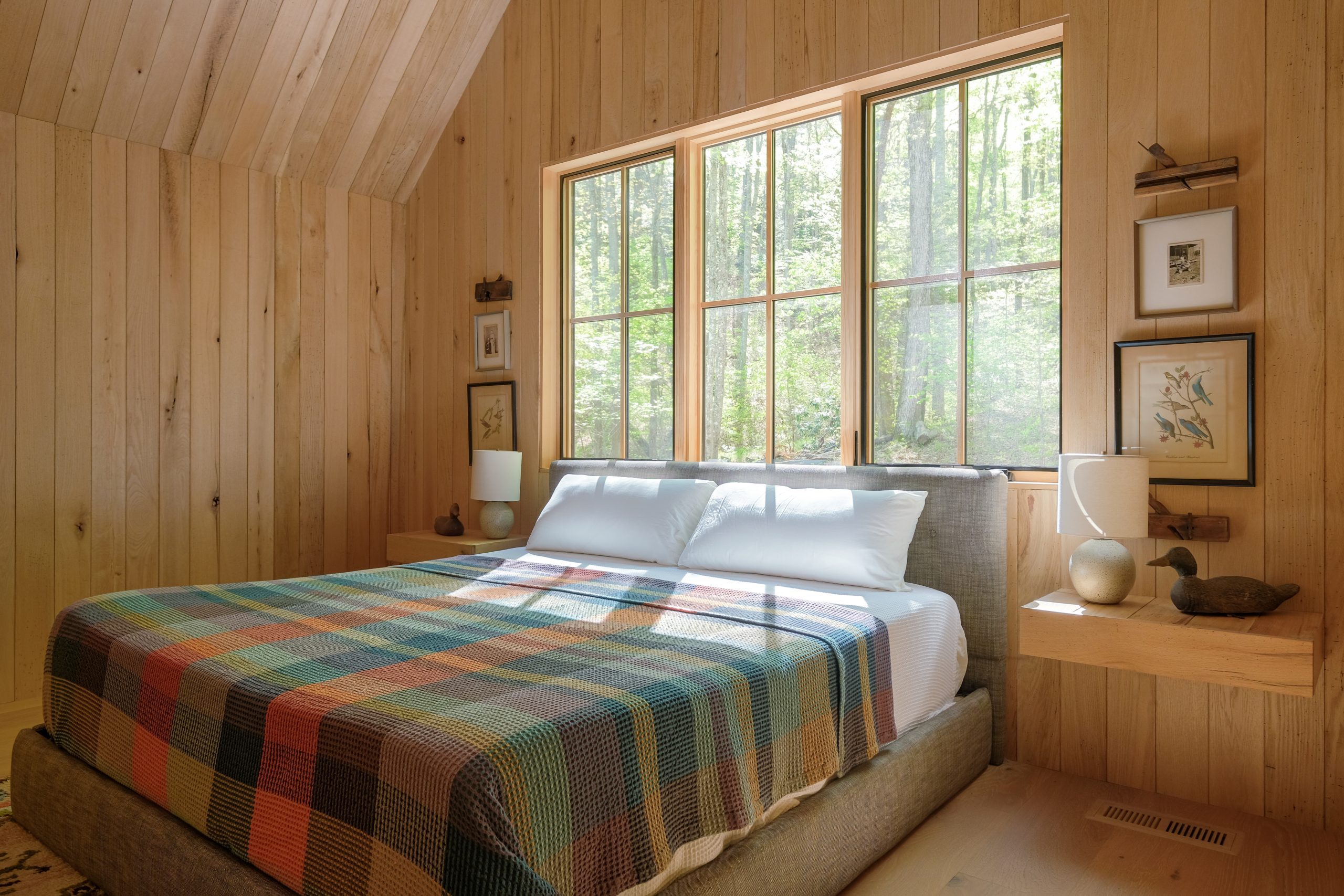
Mountain modern isn’t a style you’ll find in an architecture textbook, but you’ll know it immediately when you see it. This style has emerged in WNC over the past two decades. Mountain modern is a synthesis of contemporary design principles and the traditional style of homes found in the Blue Ridge Mountains.
Clear features of the mountain modern style are natural stone pulled directly from the landscape, warm wood in structural and decorative roles, and steeply pitched rooflines with large windows oriented toward views and light. This type of home uses materials that will weather beautifully, that will look more beautiful in twenty years than they do on day one.
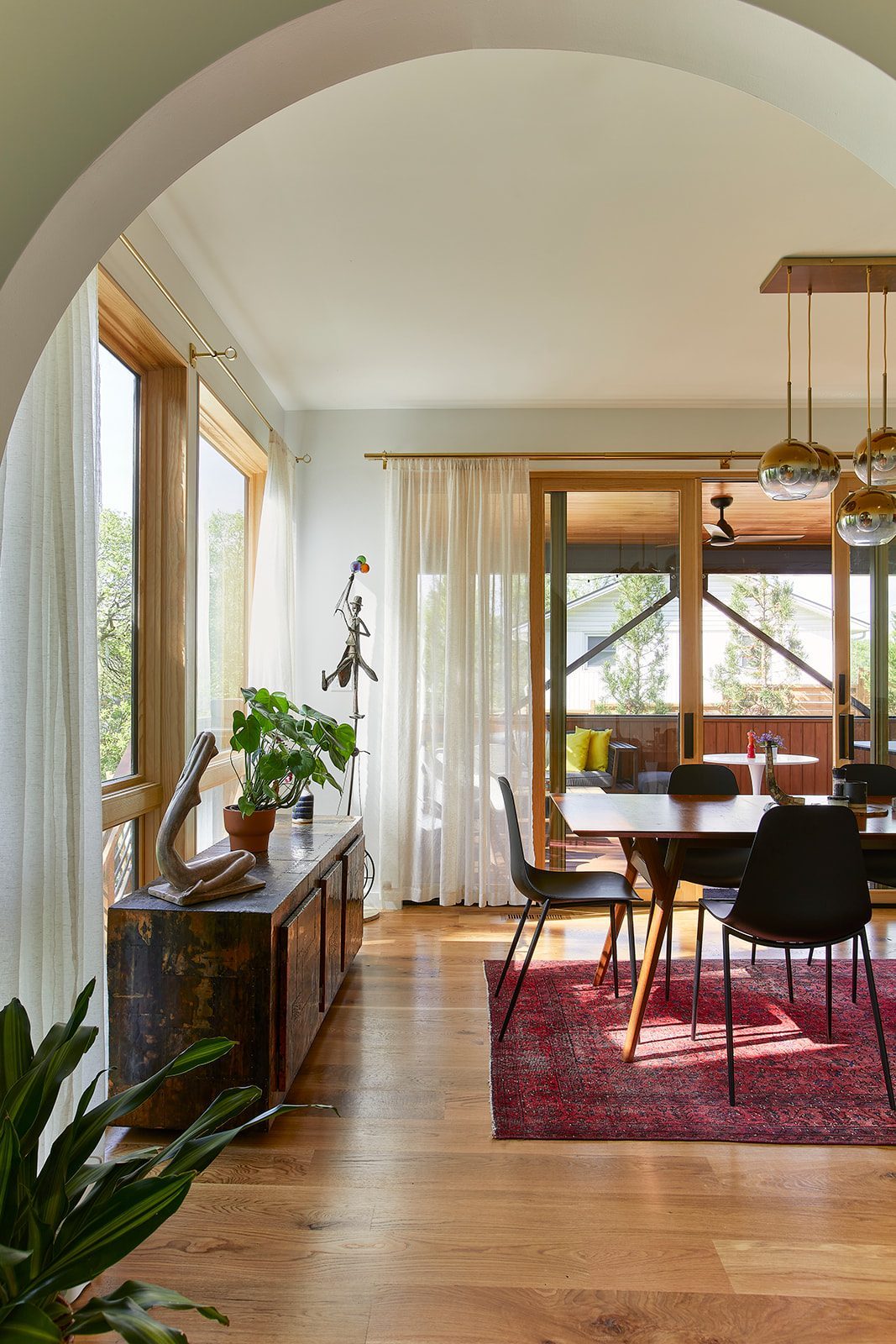
This dining room has a mid century modern dining set, with unique artistic details throughout the room
Mid-Century Modern
The mid-century modern movement emerged in 1940, ina post-WWII era. In this time, architects and designers embraced new materials, new optimism, and a new relationship between indoors and nature.
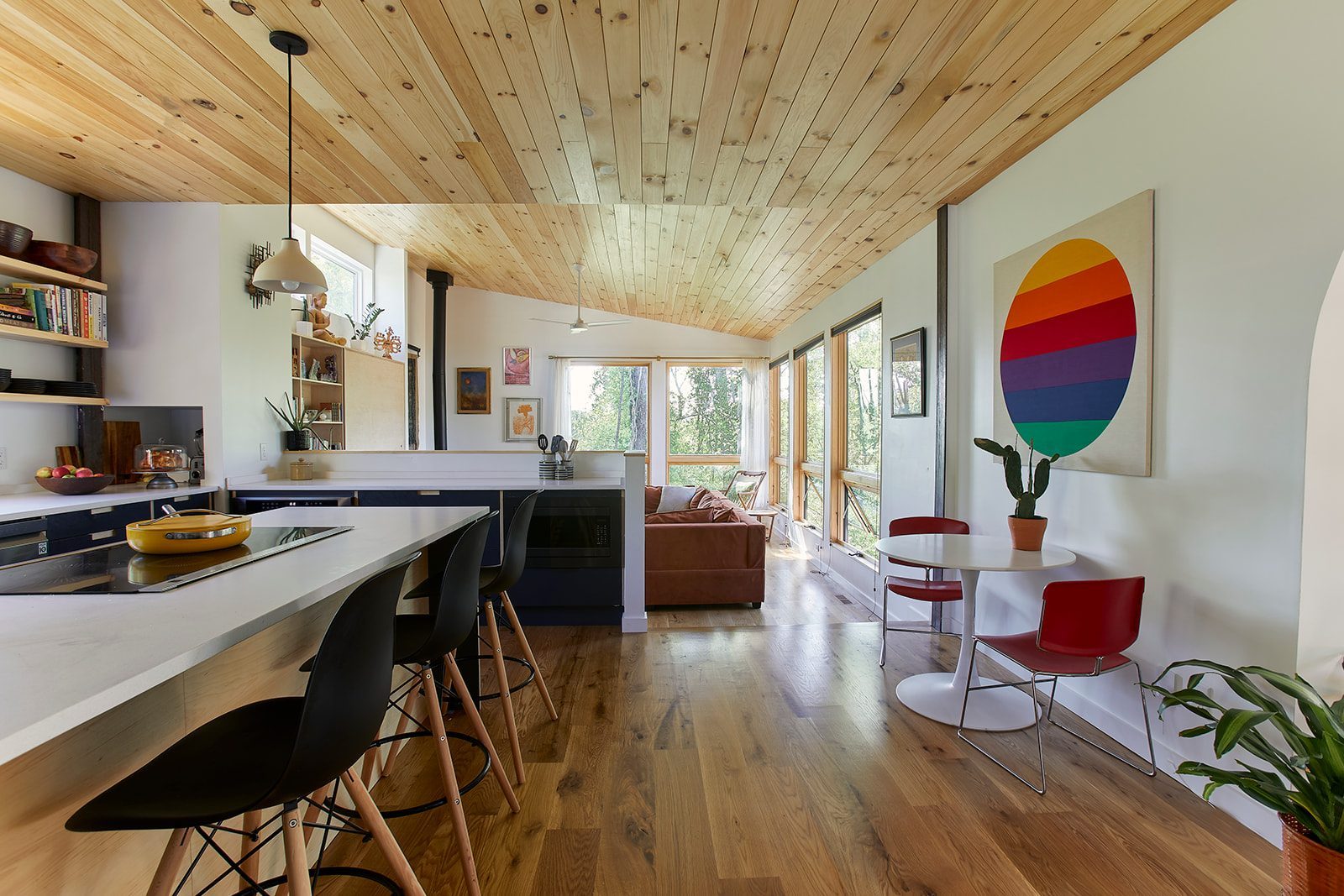
The style is defined by flat or gently sloping rooflines, large expanses of glass, open floor plans, and a nearly seamless integration with the natural landscape.
What makes mid-century modern compelling in Asheville specifically is how well it responds to our terrain. Homes designed in this tradition tend to be set into hillsides rather than imposed on them. Cantilevered sections hover above mountain slopes. Walls of glass turn nature views into living artwork. This style of architecture works with the land rather than against it.
At Assembly, we embrace the idea that a home should open itself to nature. That the line between inside and outside should feel continuous. This principle influences all of the houses we design.
Craftsman
If Asheville homes had a staple architectural style, it might be Craftsman. The style flourished in the early 20th century as a reaction against industrial mass production. The mountains of WNC embraced this style wholeheartedly. You’ll find its influence throughout Montford, West Asheville, and the older pockets of Black Mountain. This looks like wide front porches with tapered columns, exposed rafters under deep overhanging eaves, as well as handcrafted details in wood and stone that reward a closer look.
The Craftsman ethos is rooted in the idea that a home should be honest about its materials. Nothing is hidden for the sake of polish. Structural elements become decorative ones. Built-in cabinetry, natural wood trim, and earthy tones connect the interior to the surrounding landscape.
For those drawn to WNC’s tradition of handmade craft and care, Craftsman remains deeply resonant. It’s a style built on the belief that the everyday home deserves to be beautiful.
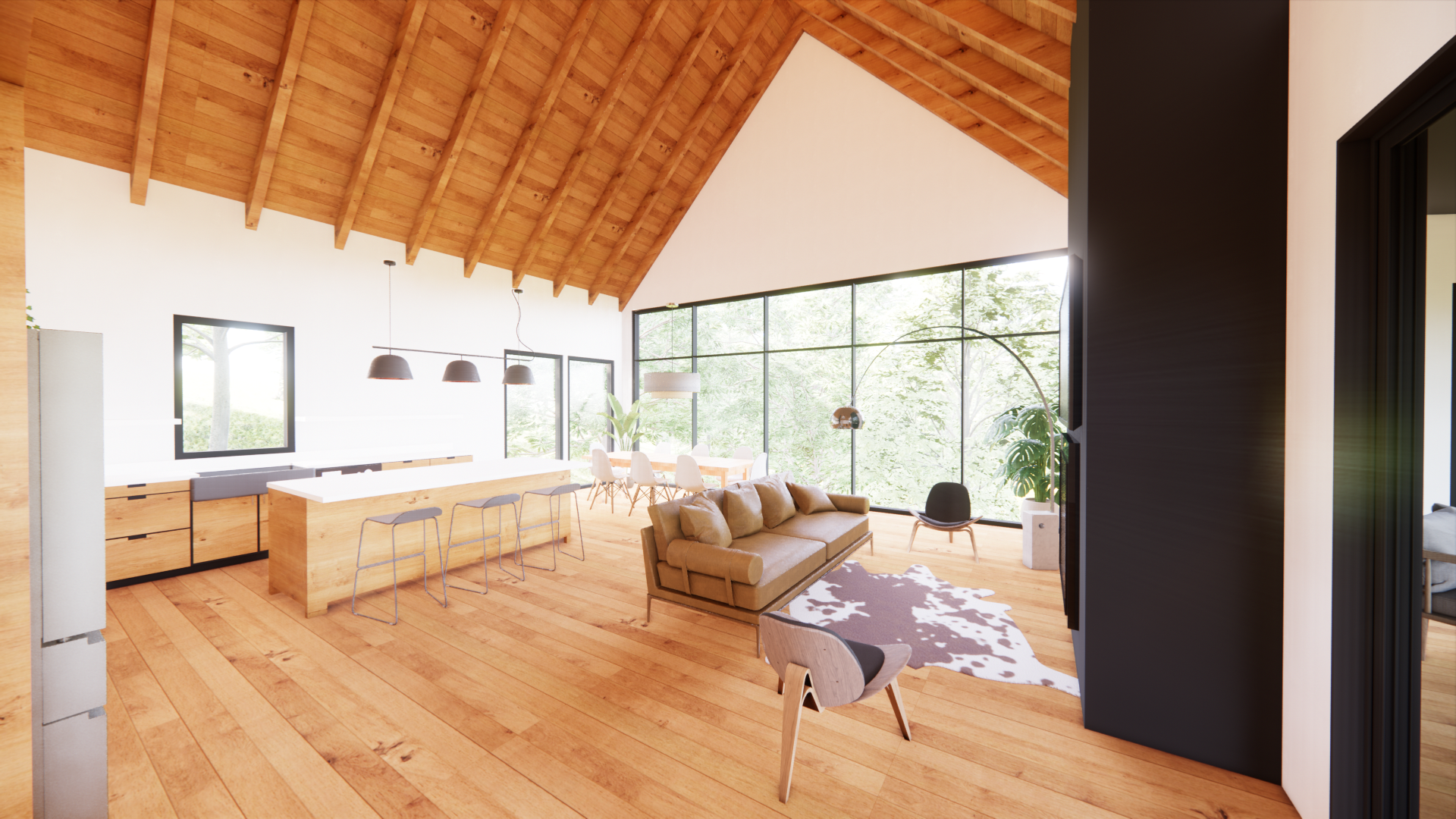
this living room has the style of “farmhouse living”
Farmhouse homes
The farmhouse style has deep roots in American rural life. In WNC, the farmhouse style fits right in with the way people live. Originally defined by pure function, farmhouses were built to work: generous kitchens for canning and cooking, wraparound porches for drying herbs and watching weather roll in over the ridge, simple gabled rooflines that shed snow and rain efficiently.
While this lifestyle is on the rise again in Asheville- it’s now combined with an artistic flare. Contemporary farmhouse design honors that utilitarian DNA while making room for warmth and refinement. Shiplap walls, exposed beams, autistic quirks, apron-front sinks, and wide-plank floors carry the historical thread. Open floor plans blur the lines between kitchen, dining, and living space, reflecting how most of us actually live today.
In a region where many people come specifically to slow down, reconnect with land, and build something lasting, the farmhouse speaks directly to that impulse.
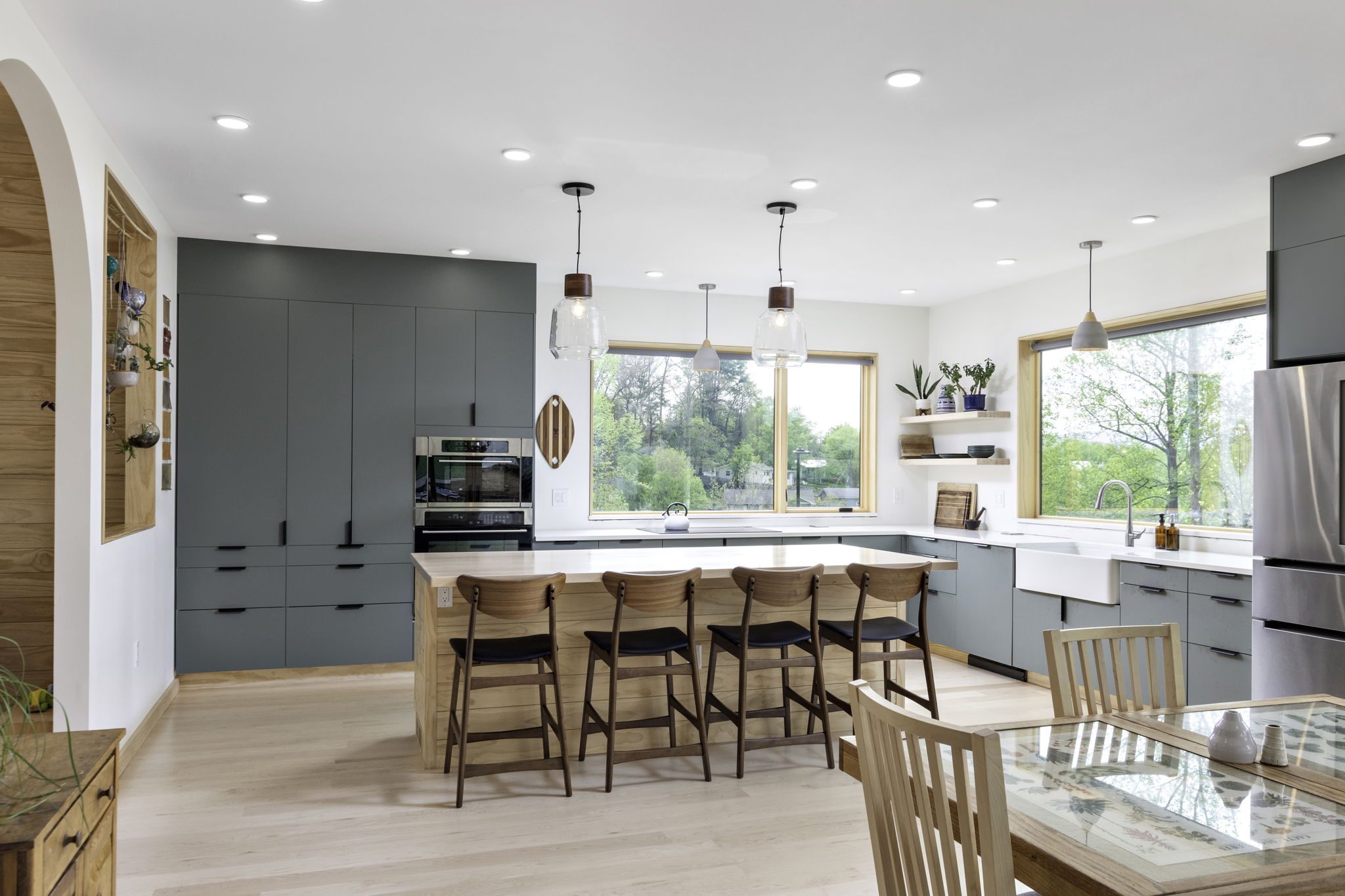
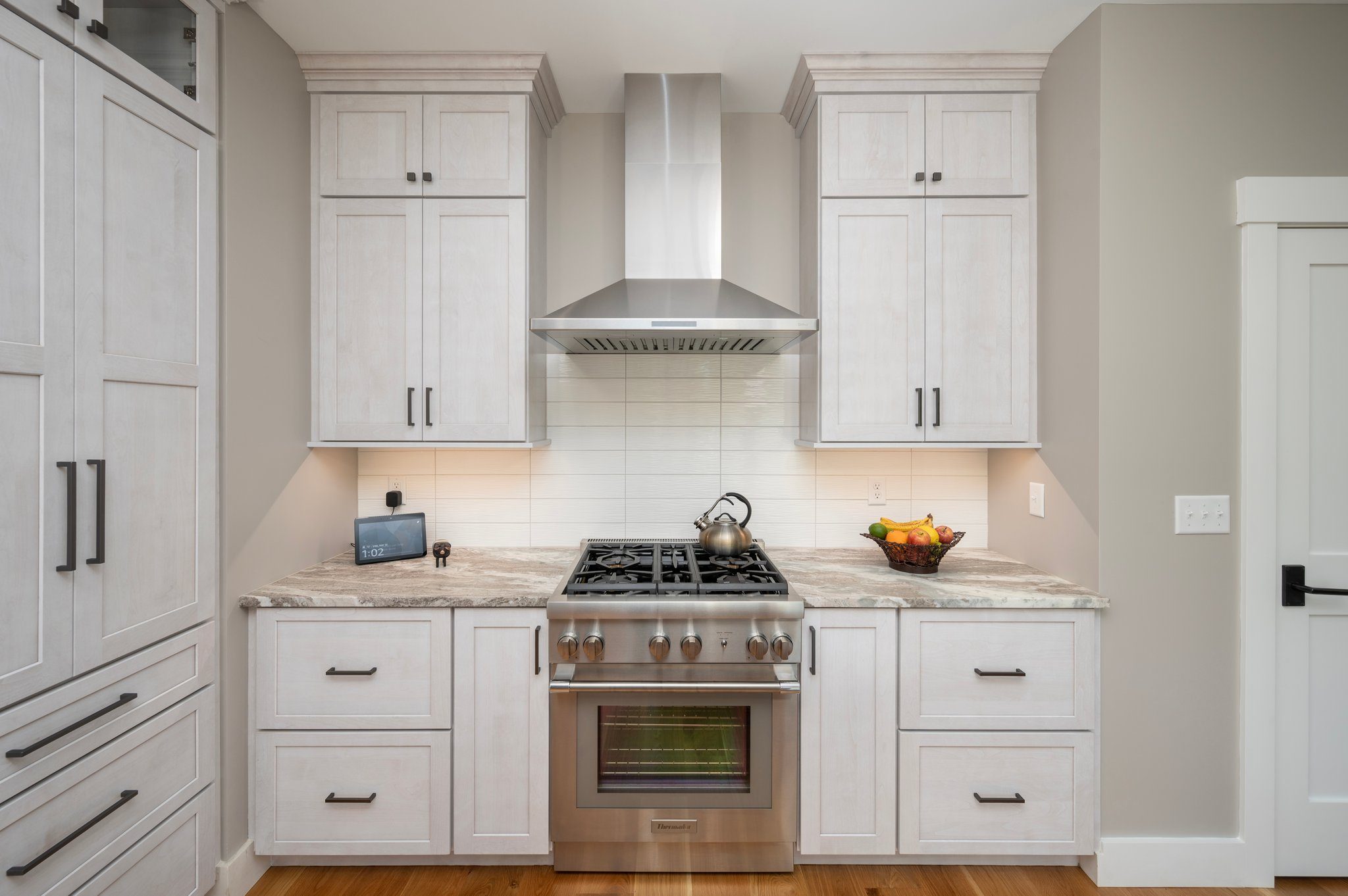
Kitchen in a contemporary style home
Contemporary
Contemporary architecture, not to be confused with the fixed era of mid-century modern, is a living style. It refers to the design vocabulary being built right now, in response to current technology, current materials, and current ways of living.
Contemporary homes in Asheville often feature mixed material palettes: board-and-batten walls alongside zinc cladding, and exposed concrete next to warm wood. Rooflines are dynamic, and windows are placed to drink in nature views. Negative space is used intentionally. Energy efficiency and passive solar design are baked into the structure from the earliest planning stages, not treated as afterthoughts.
This is the style with the most room for genuine individuality. Because it isn’t governed by historical precedent, a well-designed contemporary home is really a collaboration between the architect and the people who will live in it. It asks: who are you, and what does home look like?
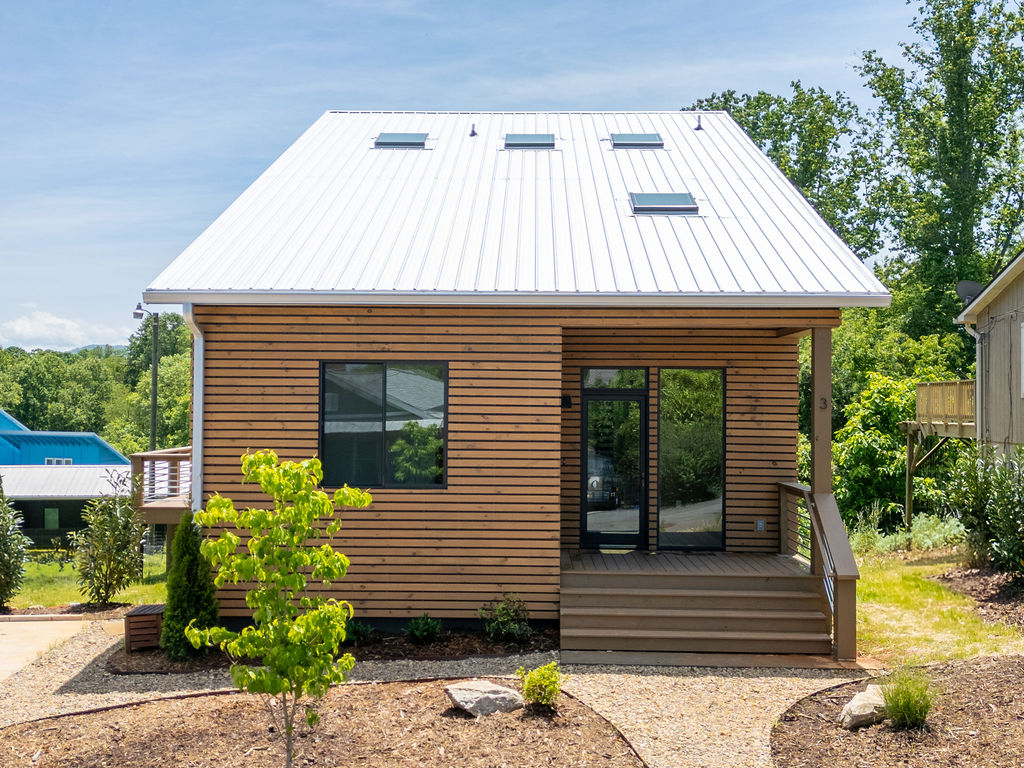
Cottage and Bungalow
Smaller in footprint but never small in character, cottage and bungalow styles have long attracted people who believe that a home doesn’t need to be large to be deeply livable. These styles prioritize coziness, human scale, and a sense of being held by a space rather than dwarfed by it.
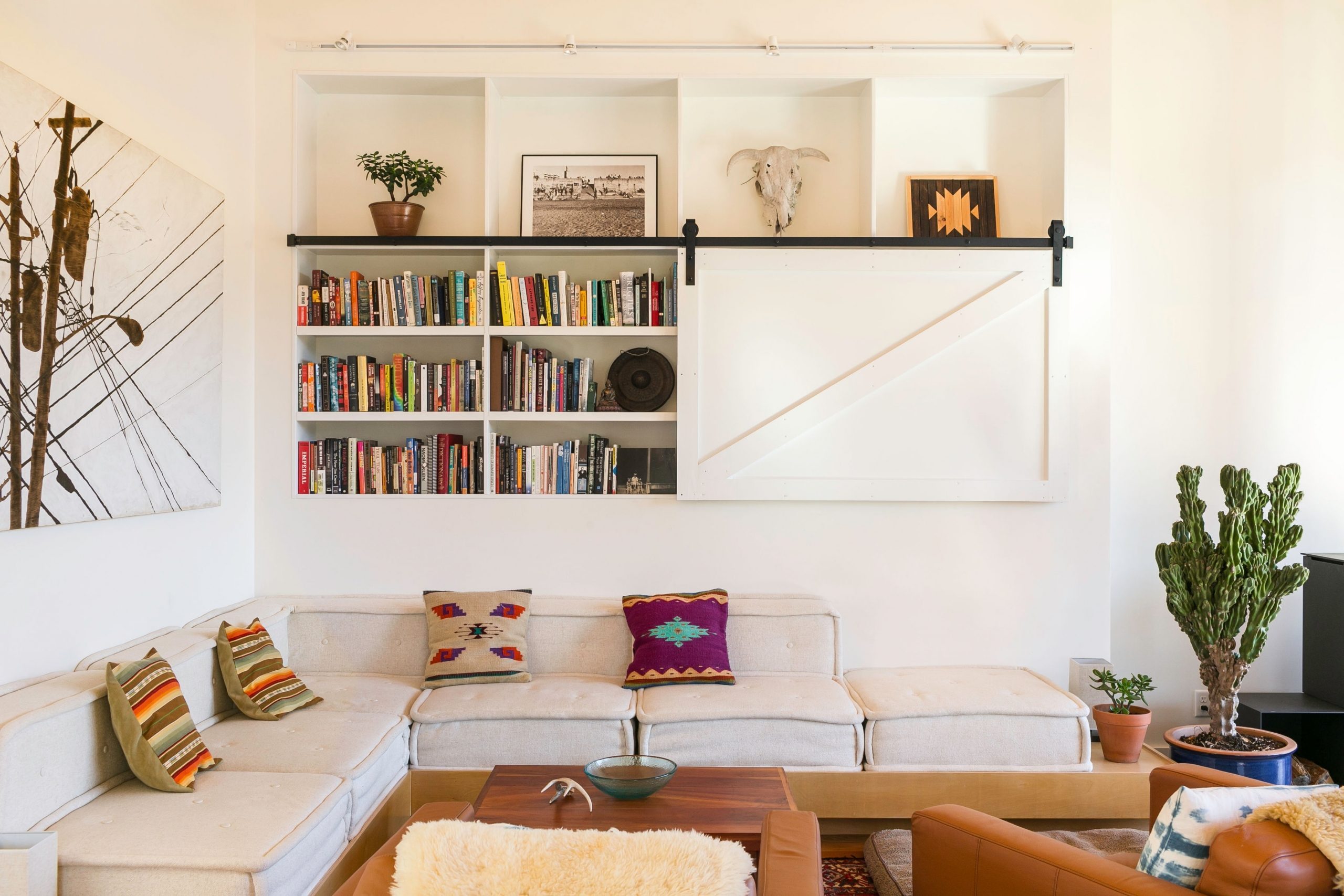
In Asheville, where lots can be small, and where many residents are consciously downsizing or building with a light footprint in mind, cottage-scale homes are on the rise. A well-designed cottage maximizes every square foot. Built-ins replace bulky furniture. Covered porches extend the living area into the outdoors. Natural light is used strategically to make compact spaces feel open and alive.
How Assembly Thinks About Style
At Assembly, we don’t begin a project by asking “what style do you want?” That question tends to put people in a box before the real conversation has had a chance to happen.
Instead, we ask about how you live. What are your priorities? Which rooms do you actually spend time in? Where does the sun come in during the part of the day you value most? How does the land you’re building on move, drain, and face the sky? What does permanence mean to you, and what do you want to hand down?
Asheville gives us extraordinary material to work with: a landscape of staggering beauty, a community that takes craft seriously, and a long tradition of building things meant to last. Whatever style ultimately shapes your home, that’s the foundation we’re all building on.
Interested in building a custom home in Asheville or Western North Carolina? Schedule your free consultation here.
ASSEMBLY Architecture + Build, PLLC | 14 O’Henry Ave, Asheville NC 28801 |

Ross Smith is both a licensed architect and contractor and founder of ASSEMBLY Architecture + Build. Ross received his degree in architecture from Yale University where he graduated with an award in design excellence. He now designs and builds sustainable, unique custom homes in Asheville, NC.

