
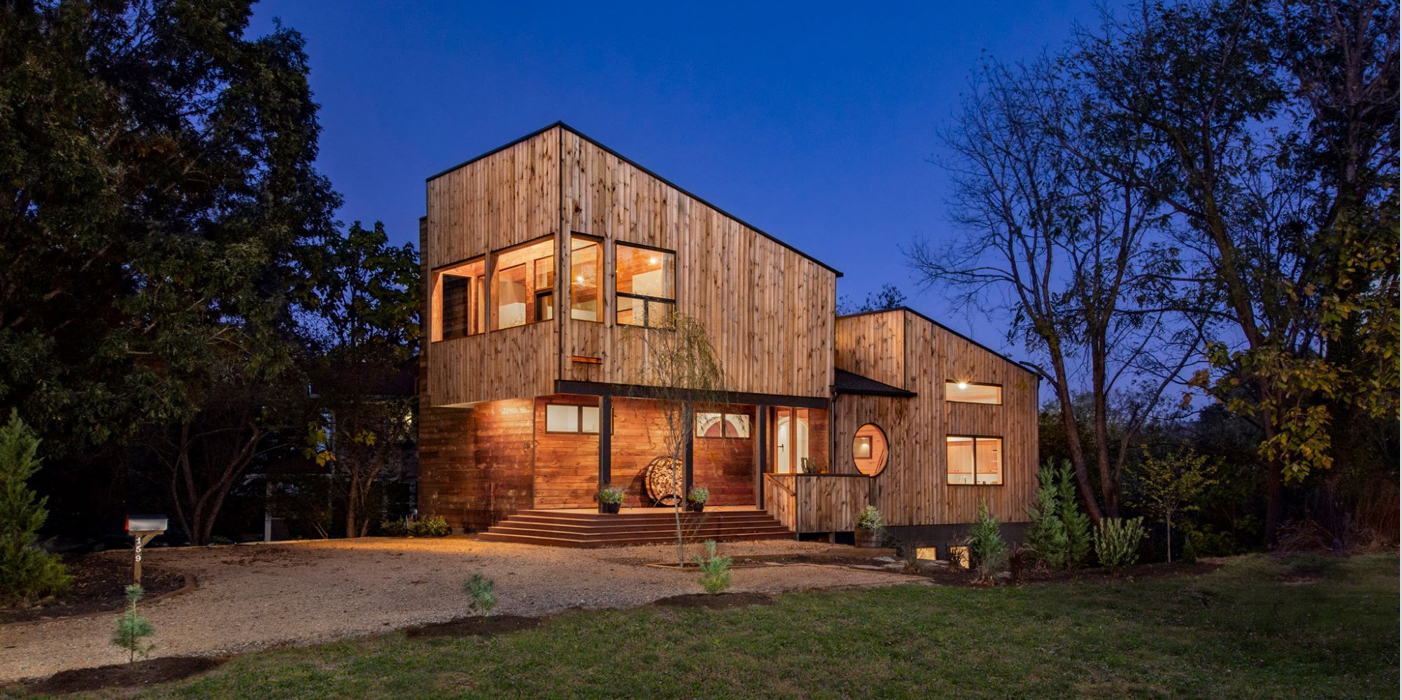
The Architecture of Light | Designing your Custom Asheville Home
The lighting in your home shapes your mood, sleep, and mental wellbeing. It’s often overlooked, an integral part of your living space. When we build our custom homes in Asheville, we ensure intentional lighting is a part of the design process.
The way we feel inside our homes isn’t just about the furniture we choose, the colors on our walls, or the people we live with. One of the most powerful hidden forces shaping our mood, energy levels, and mental health every single day is something far more elemental: light itself.
Whether it’s the flood of morning sun through an east-facing window illuminating our morning coffee- or the warm glow of a table lamp in the evening helping us unwind with a book- lighting has a profound, measurable effect on how we live, think, and feel. Light often unconsciously shifts our mood for the better or worse. At Assembly AB, we make sure to engineer the lighting in your home to support your life.
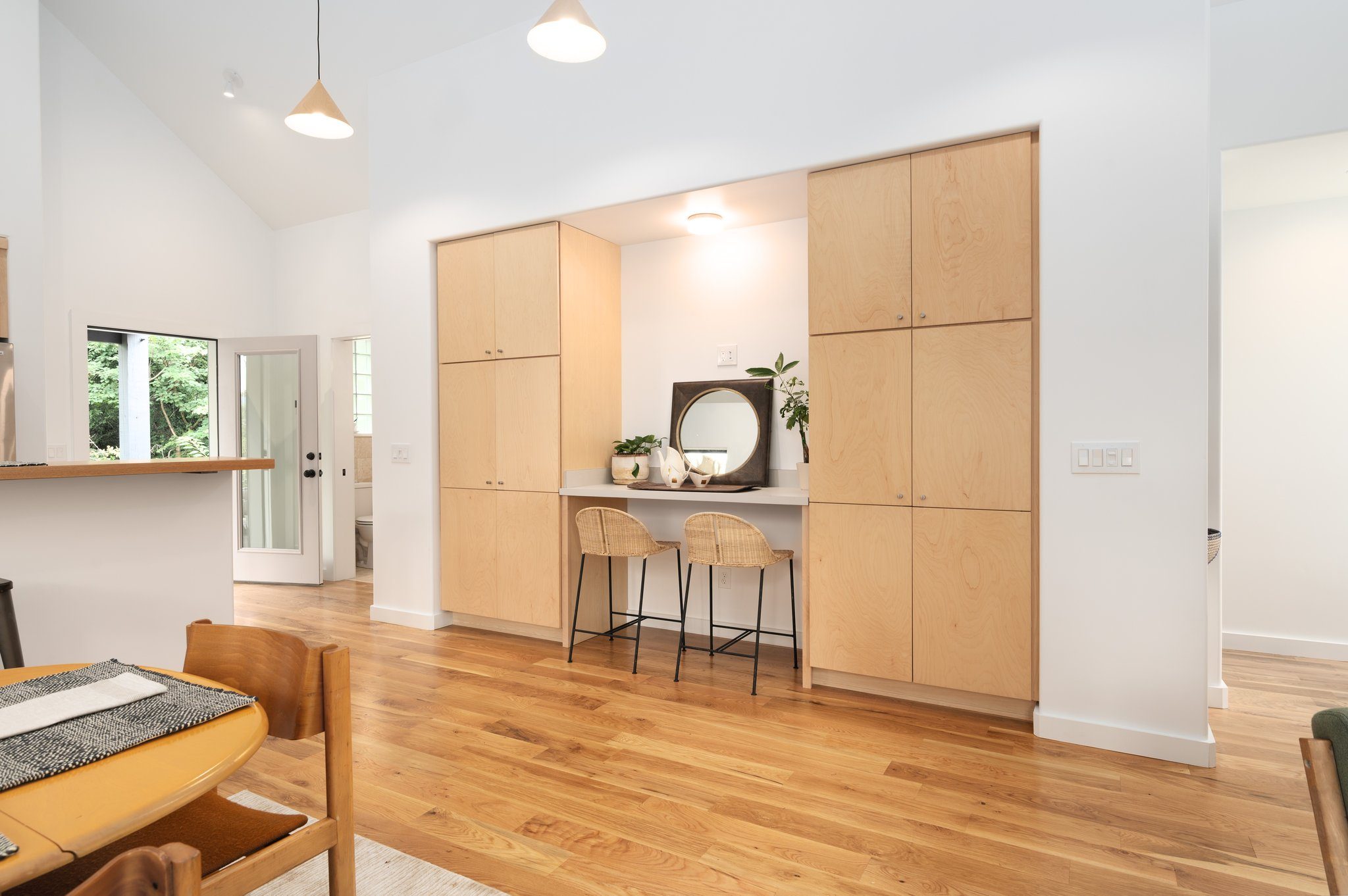
Desk nook with recessed lighting
Why Science says about lighting
Our bodies are wired to respond to light. Human biology runs on a circadian rhythm, our 24-hour clock that regulates sleep cycles, energy levels, hormone production, and mood. Light is the primary signal that sets and resets that clock.
When the lighting in your home aligns with your body’s natural needs, the benefits compound quietly but powerfully: better sleep, sharper focus, more stable moods, and a general sense of ease in your environment.
When it doesn’t, the effects can be equally subtle but cumulative, resulting in low energy, disrupted sleep, increased anxiety, irritability, and over time, symptoms that can look like depression.
It’s not just about brightness, either. Color temperature, direction, and the presence of natural versus artificial light all play a critical role.
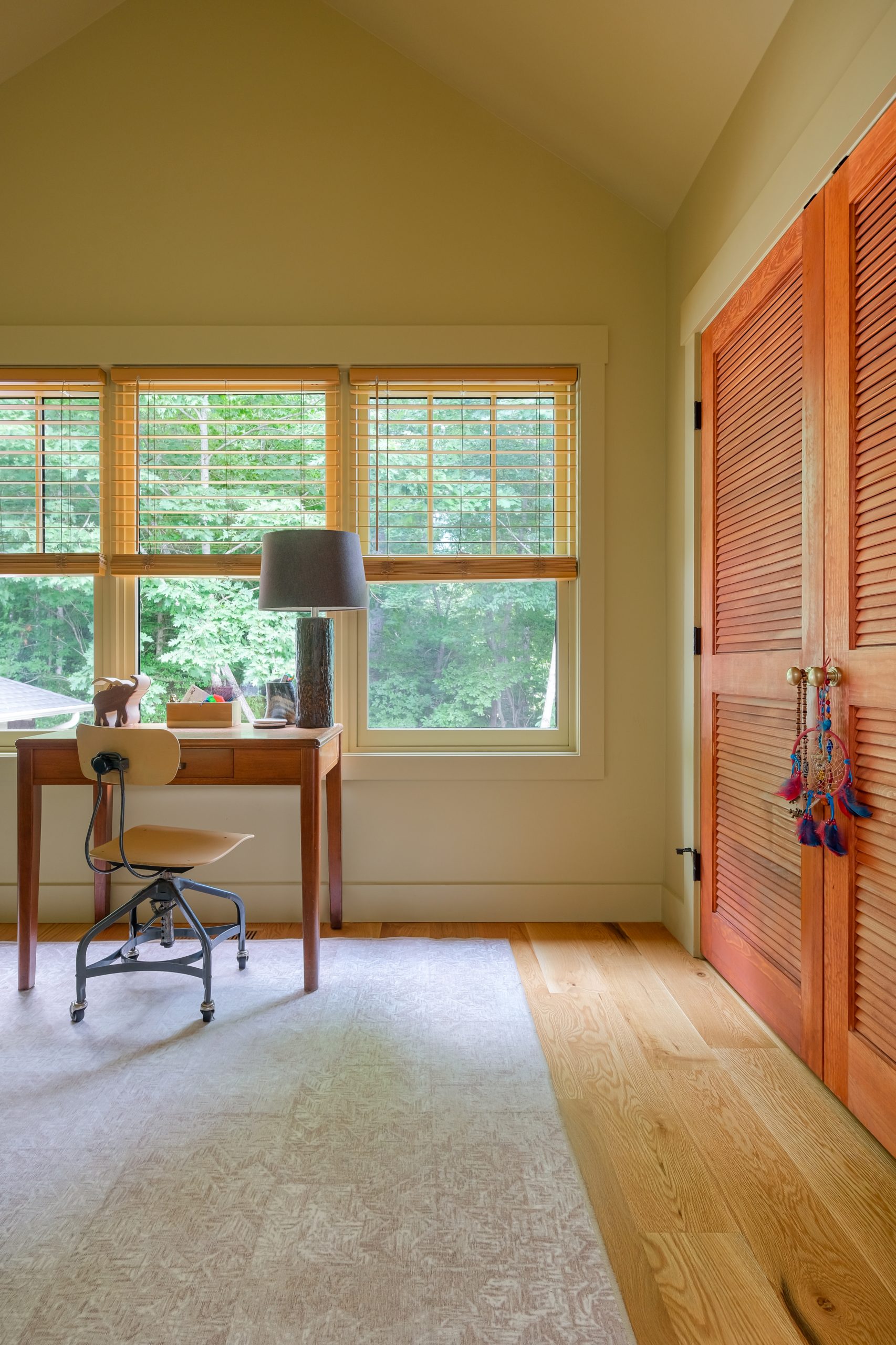
bright natural light floods this home office
Natural Light: The Gold Standard
There’s a reason people feel viscerally better in homes with generous windows, open sightlines, and close connections to the outdoors. Natural daylight is full-spectrum, meaning it contains the complete range of wavelengths that our eyes and bodies evolved to process over hundreds of thousands of years.
Exposure to natural light during the day boosts serotonin. Studies consistently link access to daylight with improved mood, better sleep, higher productivity, and even faster recovery from illness. In the home, this translates into spaces that simply feel good to be in.
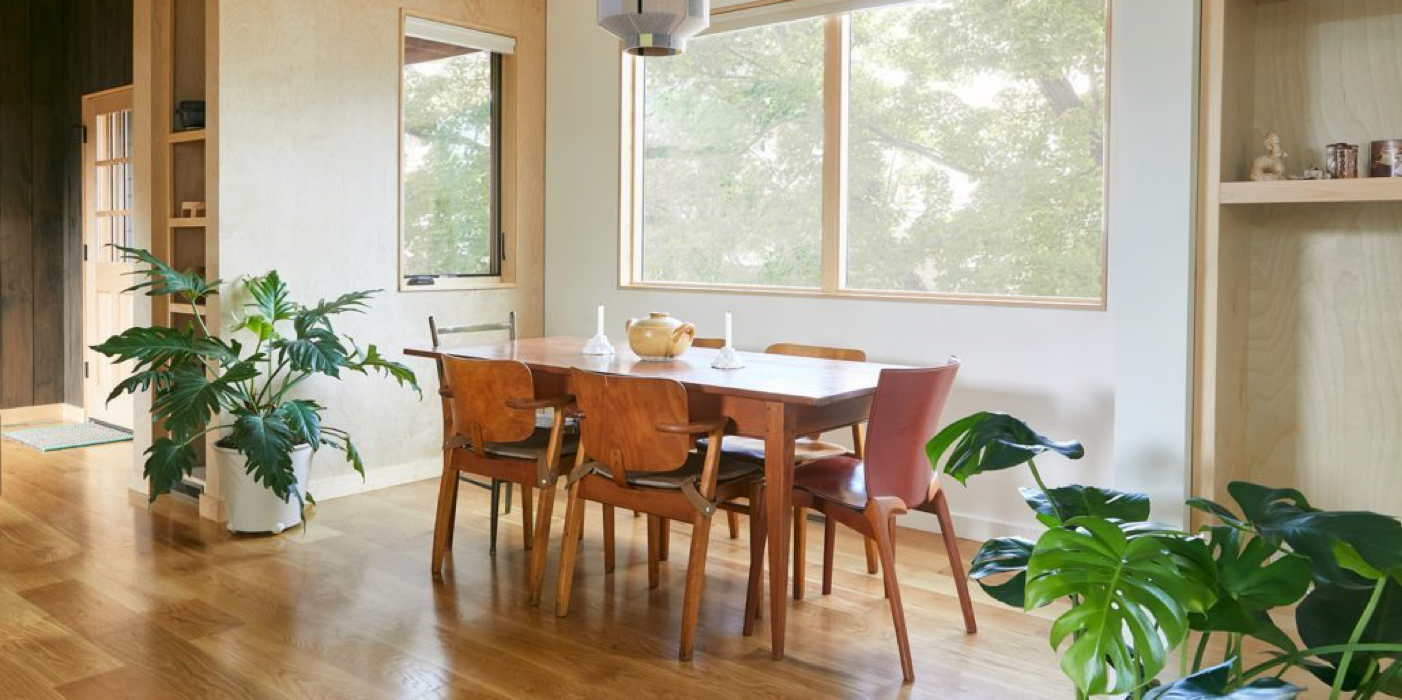
How We Design for Natural Light at Assembly
At Assembly, window orientation and daylight strategy are core decisions made at the earliest stages of design. South-facing windows capture the most consistent, usable daylight throughout the day. We use skylights to bring light into rooms like hallways, bathrooms, and kitchens where exterior wall space is limited.
We position living spaces like kitchens, home offices, and main gathering rooms to face the sun whenever possible. Bedrooms are positioned so that morning light can awaken you in the morning, giving you a boost of energy.
This custom home we built in Asheville is filled with warm lighting.
The importance of Temperature in Artificial Lighting
When the sun sets, artificial light takes over. The type of light matters enormously. Light is measured in Kelvin (K), and this color temperature has a direct psychological and physiological impact.
Cool White Light (5000K–6500K)
Cool, blue-toned light mimics natural daylight and promotes alertness and concentration. It’s useful in home offices, task-oriented kitchens, and workspaces. The problem is that in the evenings, this same cool light signals to your brain that it’s still daytime. It suppresses melatonin production which makes it much more difficult for your body to prepare for sleep.
Warm White Light (2700K–3000K)
Warm, amber-toned light has the opposite effect. It’s calming, intimate, and encourages the body to begin its natural wind-down process. This is the right choice for living rooms, bedrooms, and dining spaces in the evening hours. Candlelight sits at around 1800K, the warmest end of the spectrum, and there’s a reason it has been associated with relaxation and human connection for thousands of years.
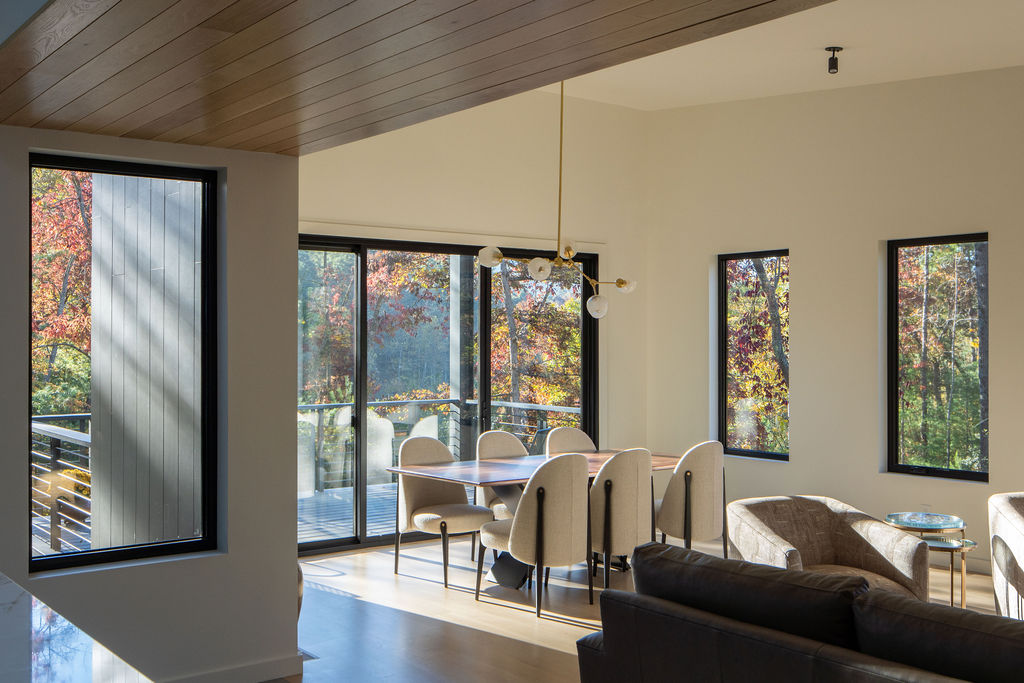
An image of OAK a home we built to house its family for a lifetime.
Pools of Light: The Psychology of Illuminated Space
Beyond circadian biology, light shapes how we perceive and emotionally experience a room.
A Pattern Language by Christopher Alexander, Sara Ishikawa, and Murray Silverstein (1977) is one of the most influential works ever written on human-centred design.
In this work, “Pools of Light,” Alexander makes an argument that contests how many modern homes are lit. Alexander states that uniform illumination across a room “serves no useful purpose whatsoever.”
Instead, he argues, lights should be placed low and apart, forming individual pools of warm light that encompass chairs, tables, and gathering spots. Almost like bubbles defining spaces within a space.
This is the idea that has been quietly behind every great interior you’ve ever felt truly comfortable in. The corner booth at a restaurant. The firelit living room. The lamp-lit reading chair. None of them were uniformly bright. They were defined by contrast.
Alexander goes further, noting that people by nature move toward light- like a moth to a lamp. The most beloved, most-used spots in any building like window seats, fireside corners, breakfast nooks, and verandas, are all defined by non-uniformities in light. What he calls “a tapestry of light and dark.”
At Assembly, this principle influences both our architectural planning and the lighting specifications we develop alongside our clients. We design layers: ambient light, task light, and accent light in every living space, with controls that let you adjust the balance depending on the time of day and how the room is being used.
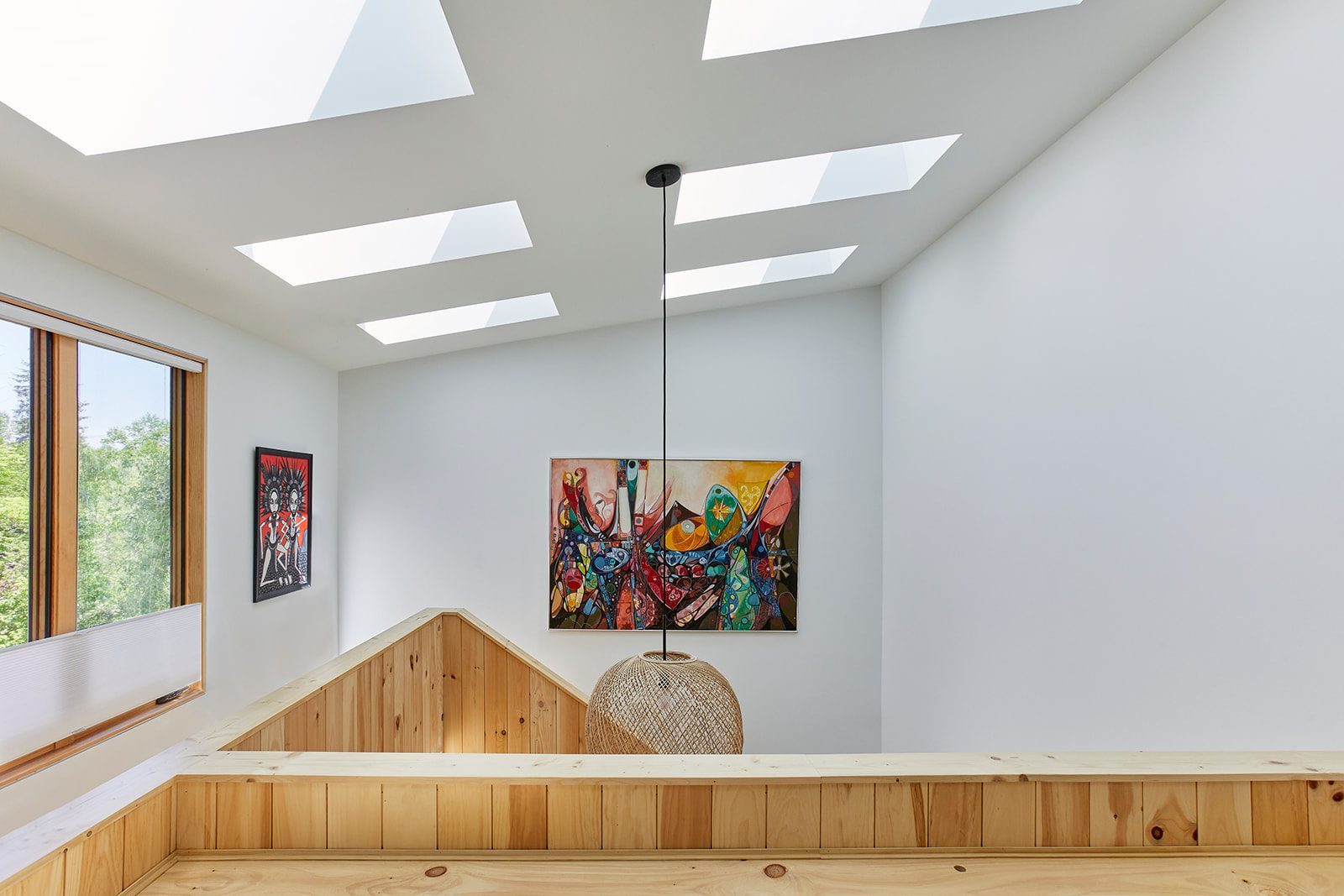
We design with skylights that let in natural light
A Note on Seasonal Wellbeing
For those living in regions like Asheville with limited winter sunlight, seasonal shifts in natural light have a measurable impact on mental health. Seasonal Affective Disorder affects a significant portion of the population and is directly linked to reduced light exposure during shorter days. Designing homes with lighting in mind can help bring lighting into the home year round. Light therapy lamps that mimic full-spectrum daylight can be integrated to support mood during dark WNC winters.
In Summary
Light is a fundamental tool in architecture. Not just for aesthetics, but for human health and happiness. Thoughtful lighting design, from the placement of windows at the planning stage to the color temperature of the fixtures you choose, can meaningfully improve your sleep, your mood, your focus, and your overall sense of ease in your home.
Interested in building a home with us? Schedule your free consultation here!
ASSEMBLY Architecture + Build, PLLC | 14 O’Henry Ave, Asheville NC 28801 | assemblyab.com

Ross Smith is both a licensed architect and contractor and founder of ASSEMBLY Architecture + Build. Ross received his degree in architecture from Yale University where he graduated with an award in design excellence. He now designs and builds sustainable, unique custom homes in Asheville, NC.

