

Sandy Springs: Building Net‑Zero While Preserving Wetland Habitat
We strongly believe that in today’s world, with increasing concerns about greenhouse gases and environmental warming, building green is an important choice. This includes designing homes to the latest energy efficiency standards and ensuring all systems are third-party tested and certified.
Our Sandy Springs build is a prime example of maintaining fragile ecosystems, and embodying the values of sustainability. We were lucky to work with a client who deeply shares our sentiments on intentional design.
The site and its unexpected neighbor
The homeowner acquired a raw parcel in the Bent Creek area southeast of Asheville, tucked along the edge of Pisgah National Forest. The site is flanked by two streams and touches a sensitive wetland- the Sandy Bottom Wetland Preserve. This wetland is under the stewardship of nearby UNCA’s “Save Sandy Bottom” initiative. This small wetland is a known habitat for the endangered four‑toed salamander Hemidactylium Scutatum. It also happens to shelter an endangered species of turtle.
Knowing the home would border such a unique and special environment, we set a goal of minimal disturbance. We decided the home would integrate, and protect the environment it lives within.

Environmental preservation architecture styles helped respect this species of salamander
The four Toed Salamander, otherwise known as “Hemidactylium Scutatum”
Photographed by Brian.gratwicke CCO
Raising the House to Respect the Land
From the outset, we opted to elevate the structure on steel piers. This strategy offered multiple advantages:
Preserving natural buffers By lifting the home, stream buffers and wetland transitions remain untouched. This “stilts” approach lets us maintain a light footprint in a critically fragile ecosystem. Additionally, we shaped the roof of the home to follow the natural watershedding of the site to minimize disturbance to the wetland in heavy rains.
Flood resilience The elevation shields the home during high-water events. In fact, the house performed very well during Hurricane Helene, and the piers give the homeowner an increased sense of security in flood conditions.
Reduced Degradation Being off-grade mitigates moisture, mold, rot, pest intrusion. It also prevents radon off-gassing, which is a common concern of homes built directly on the ground.
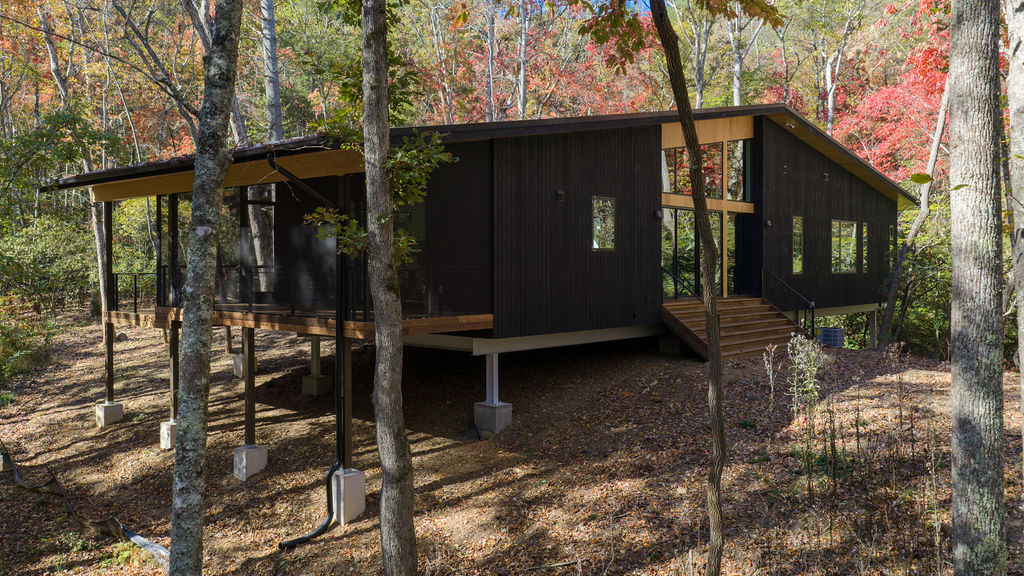
Passive solar home on stilts – Assembly Architecture + Build | Residential architects in Asheville specializing in high-performance mountain homes.
Orientation & Passive Performance
Every building choice was rooted in climate-responsive design. We engaged Vandemusser, our energy consultant, which helps certify green construction, early in the process.
Floor plan The floor plan is elongated along the east‑west axis. We rotated and sited the home to face true South with the help of our consultant. This maximizes winter solar gain while at the same time enabling shade in the summer months to help the home remain cool. It also helped reduce tree removal and elevated the screen porch above the stream.
Roofing design The roof of the home is designed with a low, sweeping roof line. This mimics the hill’s slope and sheds water naturally toward the existing streams rather than fighting the landscape’s contours. Deep overhangs also help shield the house during summer sun and keep the interior cool, and retain heat in the winter.
Windows and Doors Openings are strategically placed to frame forested vistas and invite cross-ventilation throughout the home. Their positioning also helps with passive heating and cooling.
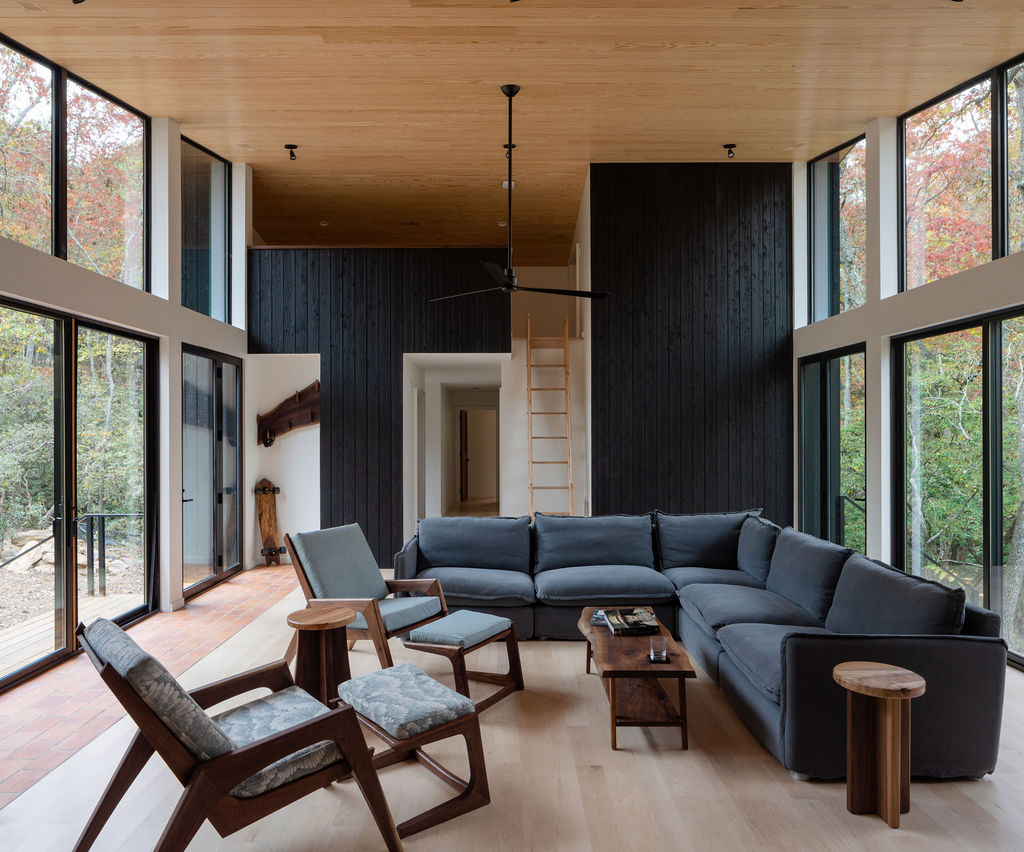
Mountain home with floor to ceiling windows in living room. Featured loft space adds a cozy feeling.
Materials as Choices for Ecology
In collaboration with the owner, we rejected “business-as-usual” materials in favor of those that align with our ecological values.
Charred hemlock siding We used the traditional Japanese charring method Shou Sugi Ban. This stabilizes and protects the condition of the wood. Notably, it stands up well to Asheville’s humid climate and prevents molding in heavy rains.
R‑ZIP insulated sheathing Placed outside the structural studs, this material breaks thermal bridges and helps maintain a continuous thermal envelope.
Natural insulation We used locally sourced wool and TimberBat (shredded bark) in wall cavities. The materials are both breathable, non toxic, low-VOC, and regionally appropriate.
Local Timber The most common framing material used is spruce-pine-fir from Scandinavia. This material comes with a large carbon footprint in the process of shipping it across the globe. Instead, we used Southern Yellow Pine which is indigenous to Georgia and South Carolina. This helped reduce our transport emissions and at the same to support regional forestry.
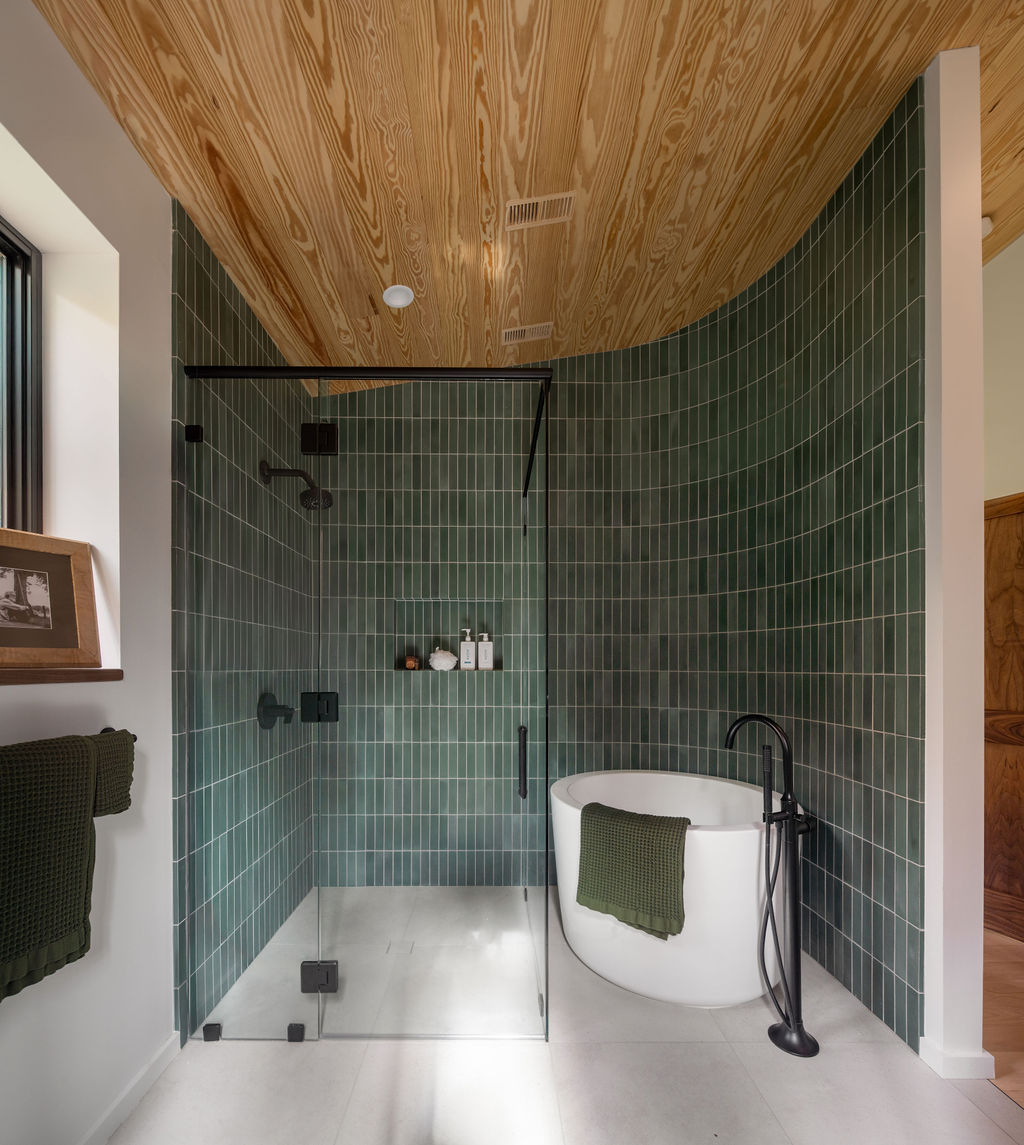
Zen spa retreat: recycled glass green tiles, soaking tub, rainwater shower. Designed by Assembly Architecture + Build
Energy Systems That Perform & Adapt
We installed mechanical systems designed for efficiency, flexibility, and user control.
Solar Panels, batteries + EV charger A 12.75 kW solar array of 30 panels powers the home. Tesla Powerwalls store excess energy and feed the home during low-production periods. We also installed an integrated EV charger to power the homeowners electric car, which helps complete the green ecosystem of the home.
Heat pump with HRV & smart fans This triad ensures consistent comfort, energy recovery ventilation, and balanced airflow.
Smart panels We installed a system that lets the homeowner schedule hot water cycles, set lighting, and manage loads from a smartphone interface to optimize and reduce energy use.
Thanks to these systems, our design achieved a very low HERS score.
Challenges, Trade‑offs & Stewardship
One of the most entertaining and unexpected challenges of the sites came with the Shou Sugi Ban siding. We quickly noticed that bears took a strong liking to its texture, and perhaps mistook the siding of the house for a tree. This caused them to use the siding as a material to sharpen their claws, leaving visible scratches on the siding of the home. This issue ceased when the bears went into hibernation. With the presence of the owners, we are hoping it will keep the bears away, and if needed there is an option to spray the siding with a concentrated cayenne liquid to prevent them from damaging the siding.
It also was a challenge to shoehorn the home into the site. We decided to cut a very minimal number of trees, and to protect root zones. This meant painstakingly bringing materials into the site.
Additionally, because we wanted every element of the home to respect the site, and to have as minimal of an imprint as possible the price of the home went up as we refined its environmental features. We were lucky to work with a client who shared our values, and wanted to make this financial decision and see the project in its highest element.
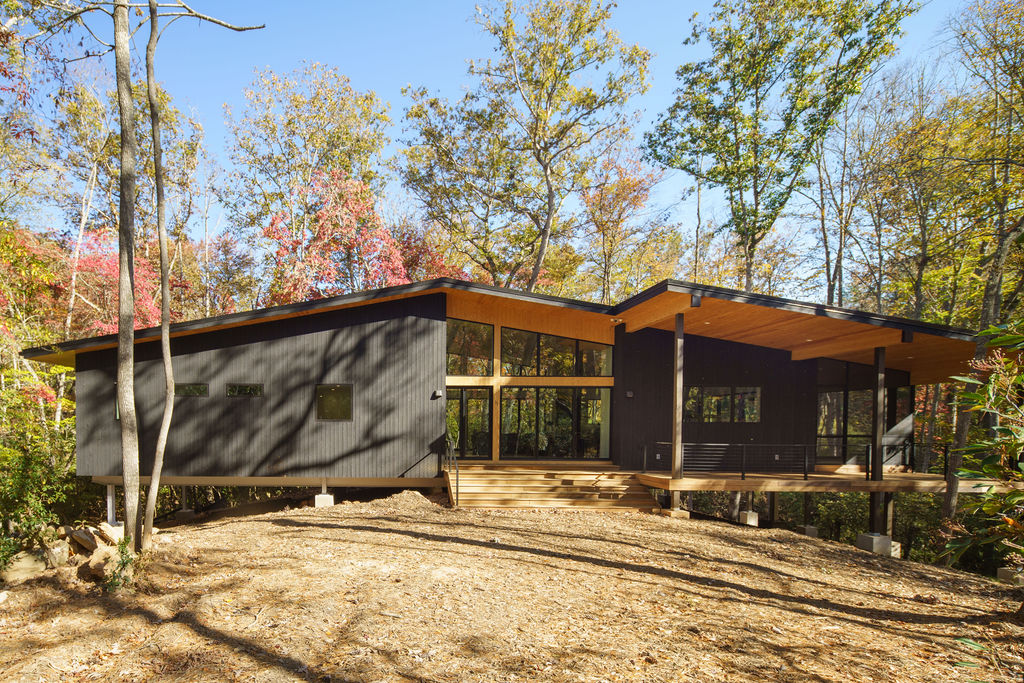
Net-zero mountain modern residence by Assembly Architecture + Build Asheville’s leading architecture firm.
What This Project can Teach Builders and Homeowners
When endangered species live next door, it can be a joy to celebrate them and to take green home design to its highest potential.
Elevation in this case wasn’t just aesthetic. It can provide climate resilience, and a healthy interior by minimizing mold and pests. Additionally, green design is truly systems thinking. From home orientation, construction materials, mechanics, and site consideration, all of these elements need to be carefully considered to truly build in harmony with the site and the overall environment.

