
Designing Health from the Inside Out and The Rise of Non-Toxic Interiors
Sustainable architecture has long focused on energy production, carbon footprint, insulation performance, and renewable systems. But a new dimension of sustainability is emerging, one that looks inward at the health of the people who live inside these spaces. Air quality, material safety, and overall wellbeing have become important considerations in how we define a truly sustainable building. It’s no longer enough for architecture firms to do less harm to the planet. It’s also important that they do good for the humans inside.
The conversation no longer revolves around only kilowatt hours and carbon to comfort. It also now includes the chemistry of materials, and their impact on humans. This evolution marks a profound change in the purpose of design itself. Sustainability is no longer just about “saving the earth” it’s about seeing humanity as a living, breathing part of the environments that sustain us.
Hidden Toxins in Built Environments
Modern homes often look clean and healthy. Polished concrete, freshly painted walls, and soft new furniture look simple and inviting. Yet many of these materials quietly release chemicals into the air we breathe.
The very finishes that make a space seem new and alive can be the source of invisible toxins and pollutants. Different paints, sealants, adhesives, composite woods, and synthetic fabrics frequently emit Volatile Organic Compounds (VOCs). This is a class of chemicals linked to headaches, fatigue, and respiratory irritation. Others contain formaldehyde, flame retardants, and PFAS also called “forever chemicals” which can persist in the human body for decades.
Over time, these compounds accumulate indoors. They create air that is often more polluted than what’s outside. In fact, according to the U.S. Environmental Protection Agency, indoor air can be up to five times more contaminated than outdoor air.
For people who spend the majority of their lives inside, which is most of us, this represents a chronic toxin exposure that affects everything from cognitive function to immune health.
We create shelters to protect ourselves from the elements, yet many of them compromise the very wellbeing they’re meant to support. As architects and designers, recognizing these hidden toxins is the first step toward reversing that imbalance. Green architects are now building interiors that are not just aesthetically refined, but biologically kind as well.
What Makes an Interior Healthy?
A truly healthy interior begins long before the walls are painted or the furniture is placed. It starts with the building materials themselves. Their composition, how they interact with air and moisture, and the ways they affect human health. In essence, a healthy building behaves like a living system. It breathes, regulates, and supports life.
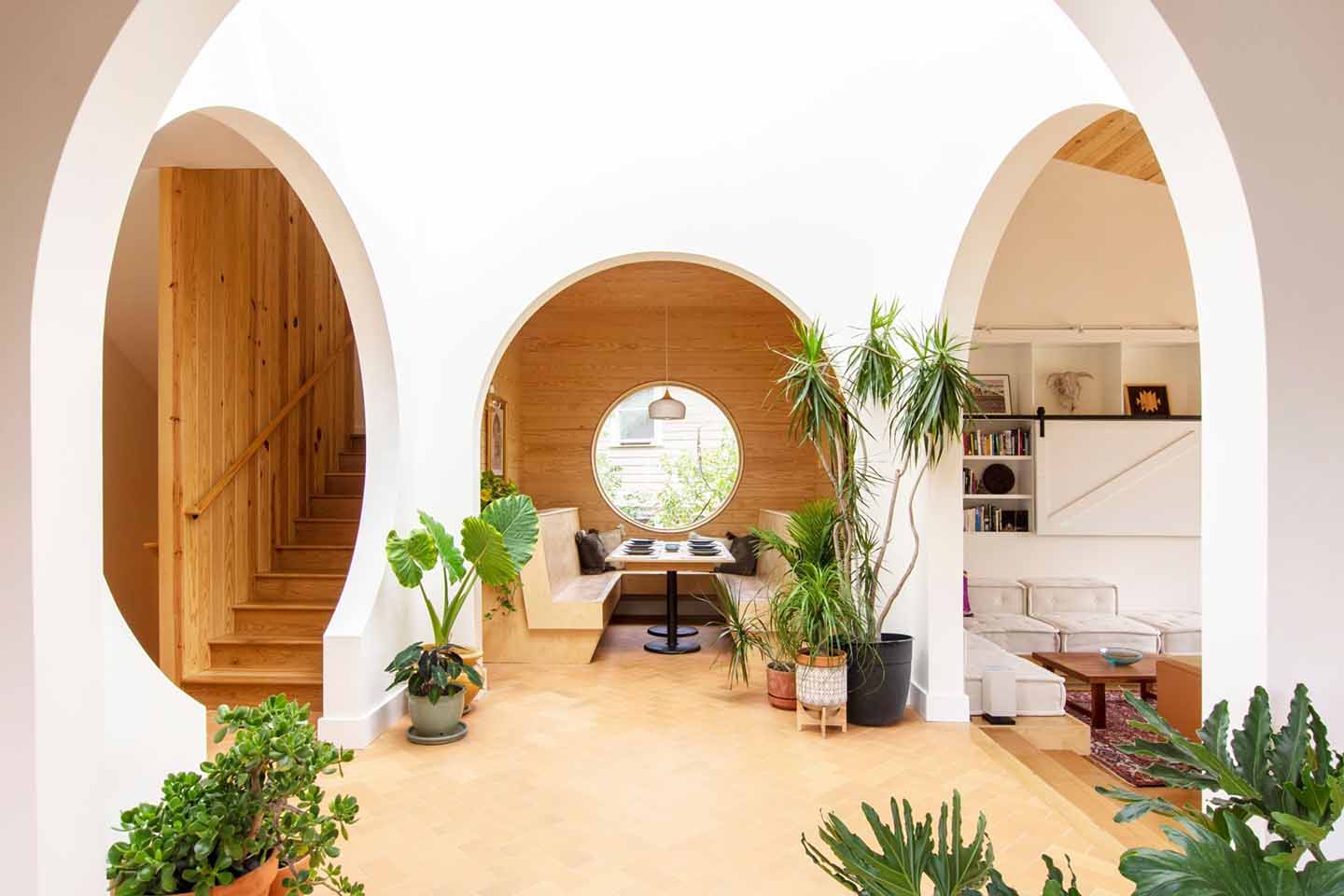
A low-VOC home built in Asheville by Assembly AB
Non-toxic interiors are built using Zero-VOC paints, natural plasters, solid wood, and plant-based finishes. These allow air to circulate and surfaces to “breathe.” Clay and lime walls absorb humidity, regulating indoor air naturally without mechanical intervention. Natural fibers such as linen, wool, and cork introduce warmth and texture while reducing synthetic off-gassing. Even simple decisions like choosing a mineral adhesive over a chemical one, or prioritizing solid wood cabinetry instead of composite boards can have measurable effects on indoor air quality and human comfort.
Designing for health also means designing for the senses. Natural materials have a tactile and visual honesty that calms the nervous system. A soft texture, or the scent of natural wood can signal safety and grounding. Daylight, fresh airflow, and acoustic balance all contribute to a space that not only looks beautiful but also feels nourishing. In this way, material health becomes synonymous with human health: when our buildings breathe freely, so do we.
Building Homes for Health in Asheville and How we create Healthy Interiors
At Assembly Architecture and Build, it is a priority for us to integrate these practices. One of our latest homes illustrates how we can take health to the next level.
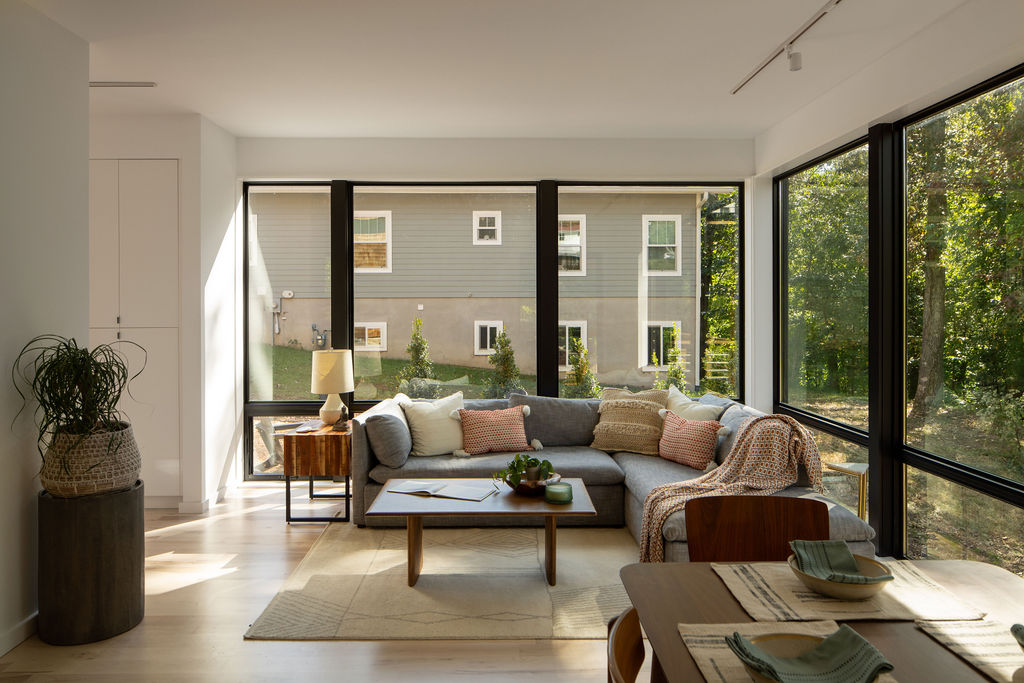
Low VOC interior of a home we built in Asheville
Our build Sandy Springs can be a great example. The client had a strong interest in sustainable principals. For the insulation, we used locally sourced wool and TimberBat (shredded bark) in wall cavities. The materials are both breathable, non toxic, low-VOC, and regionally appropriate.
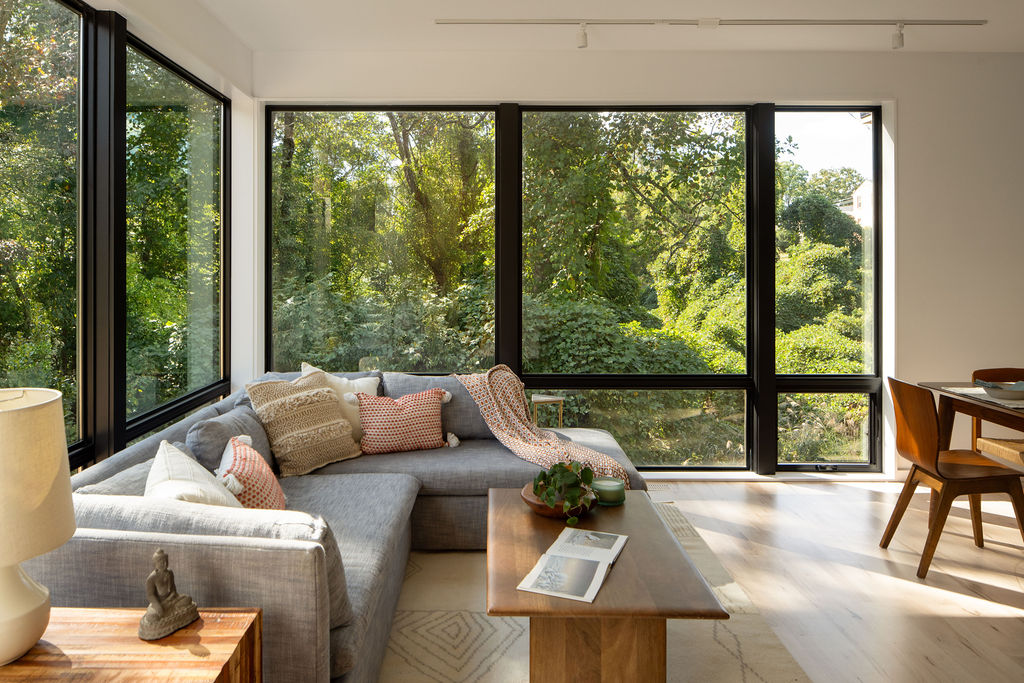
When it comes to windows and doors, openings are strategically placed to frame forested vistas and invite cross-ventilation throughout the home. Their positioning also helps with passive heating and cooling and allows light to cascade through the home. To add additional airflow, we installed smart fans. This not only improved energy recovery, it also helped ensure ventilation and contributed to balanced airflow throughout the home. If you’re interested to learn more about Sandy Springs, check it out here!
Green home builders are now incorporating human health. If you’re interested in building a home that contributes to your wellbeing, shoot us a message and join our mailing list!

