
How to Choose Land in Asheville for a Sustainable Custom Home
What Architects and Builders Look for First
If you’re dreaming of building a custom home in Asheville or the surrounding mountains of Western North Carolina, the first big decision isn’t your floor plan. It’s your land.
The home site you choose will shape everything: your home’s orientation, your foundation cost, your connection to utilities, your views, and yes, your total budget. And in Western NC, where terrain, soil, and microclimates vary dramatically from one ridge to the next, choosing the wrong parcel can turn a beautiful project into a costly one.
At Assembly Architecture + Build, we’re a design-build firm, which means our architects and builders evaluate land together, early. We’ve assessed dozens of sites across Asheville, Black Mountain, Weaverville, Marshall, and beyond. This guide shares what we look for, and what you should too.
Land Selection is Critical in Western NC
Most land-buying guides are written for flat suburban lots. Western North Carolina is anything but flat.
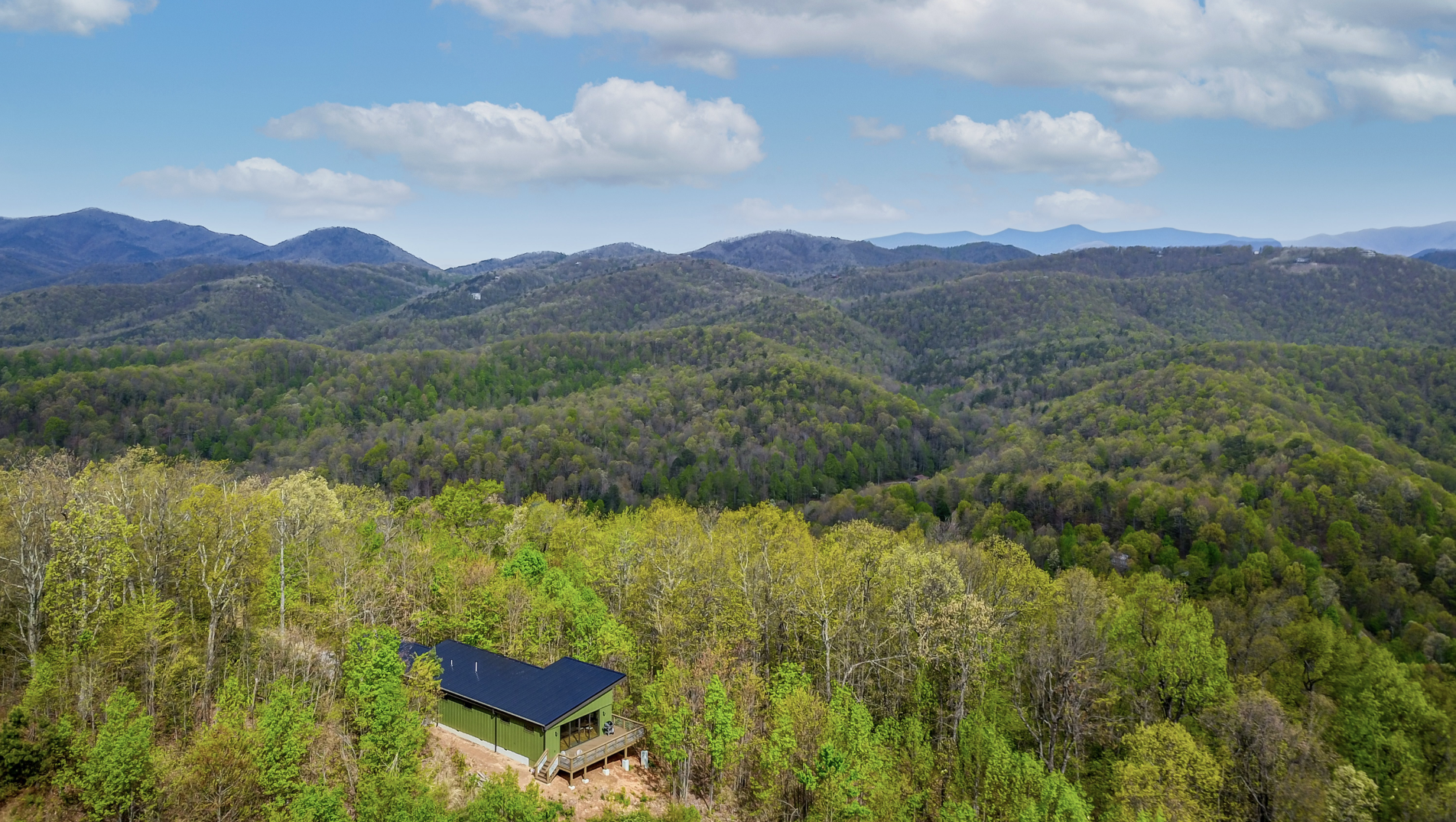
Asheville sits in a mountain basin at around 2,100 feet elevation. The surrounding region, from the Black Mountains to the east to the Newfound Range to the northwest, is characterized by dramatic topography, dense tree cover, variable soils, and microclimates that can differ significantly within a few miles. These traits influence how buildable a piece of land is, and what it will cost to build on it.
A steep sloped lot in the hills above West Asheville might have breathtaking views and terrible solar access. A flat parcel in the Swannanoa Valley might drain poorly after heavy rain. A wooded tract in Madison County might require a half-mile of road construction before a shovel breaks ground.
This is why at Assembly, we’re happy to help with the land selection process before you make an offer, not after. The cost of a pre-purchase site evaluation is a fraction of what a problematic lot can add to your build.
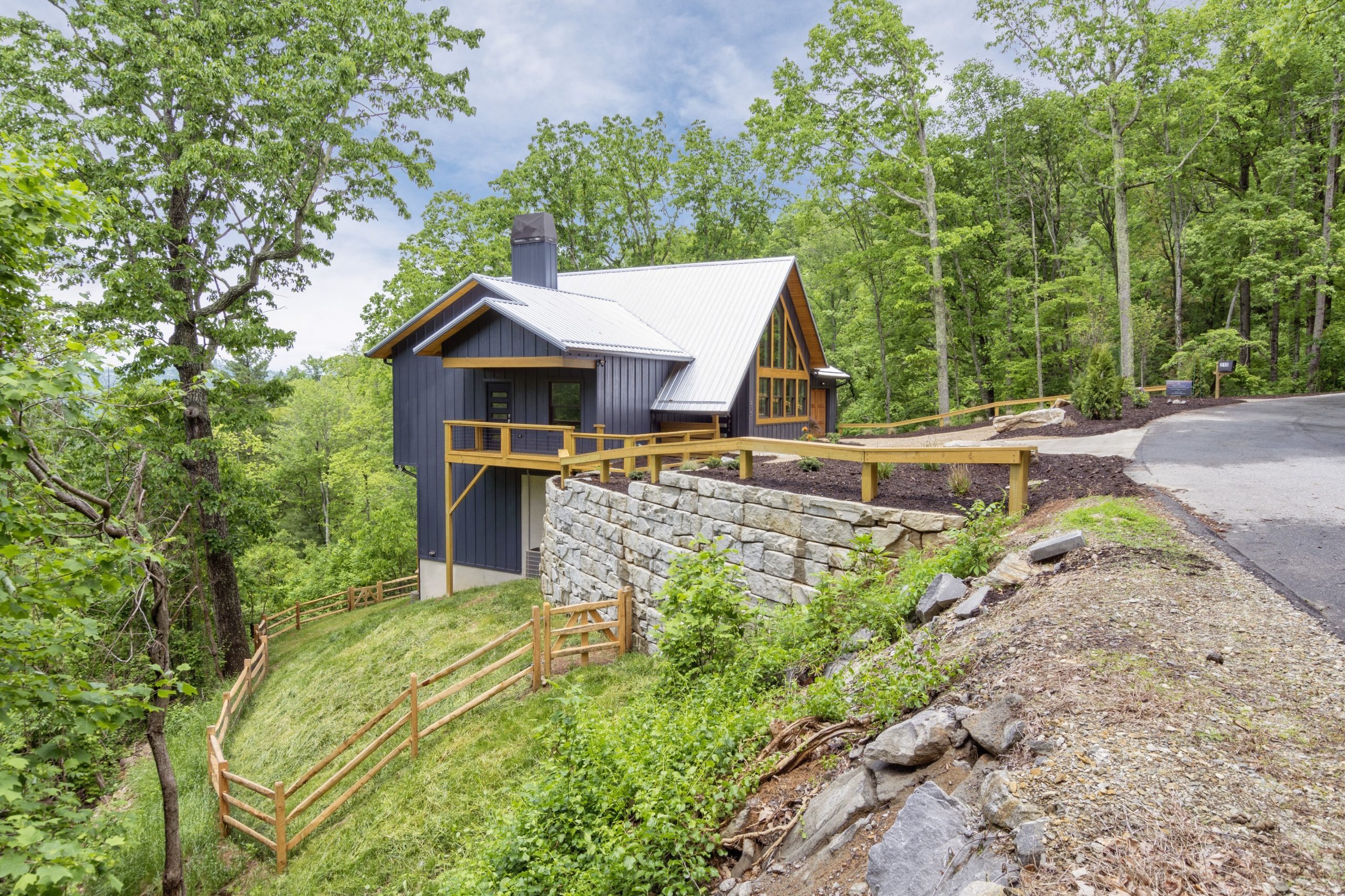
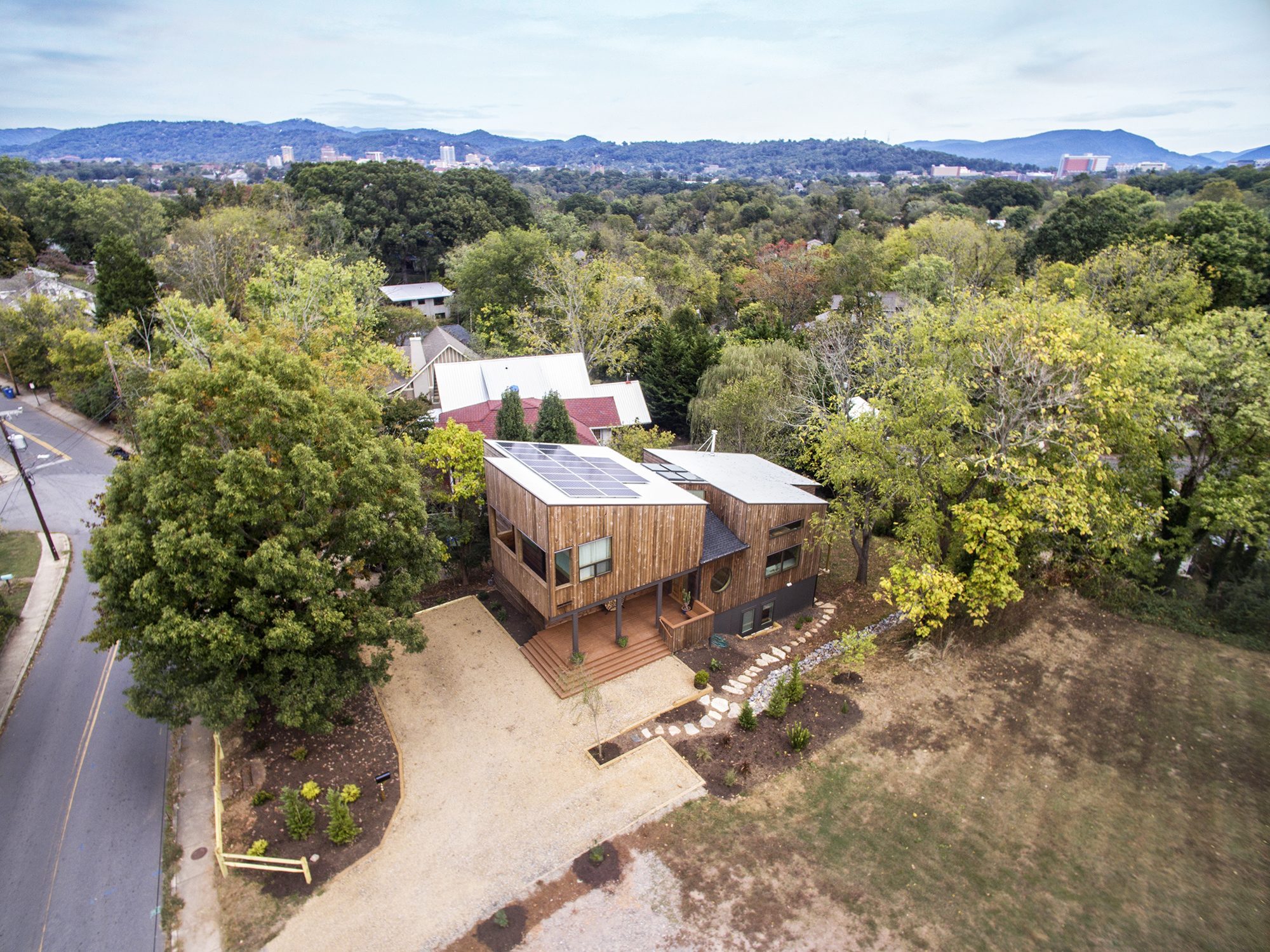
North Asheville provides ample nature for home design, as well as a closeness to the city
6 Things to Evaluate When Choosing Land for a Custom Home in Asheville
1. Slope and Topography
Slope is the single biggest cost variable in Western NC land. Flat or gently sloping lots are significantly cheaper to build on. Steep slopes require:
- More complex foundations (often pier or helical pile systems rather than a simple slab)
- Retaining walls and grading
- Longer, more expensive driveways
- More elaborate stormwater management
None of these are dealbreakers, and some of Assembly AB’s most beautiful custom homes have been built on challenging terrain.
But you need to price the site work before you fall in love with the view. A steep lot priced at $150,000 can easily add $80,000–$150,000+ in site costs compared to a flat equivalent.
A simple rule: walk the land after a rainstorm. Where does water go? That answer tells you a great deal about foundation and drainage complexity.
2. Solar Orientation
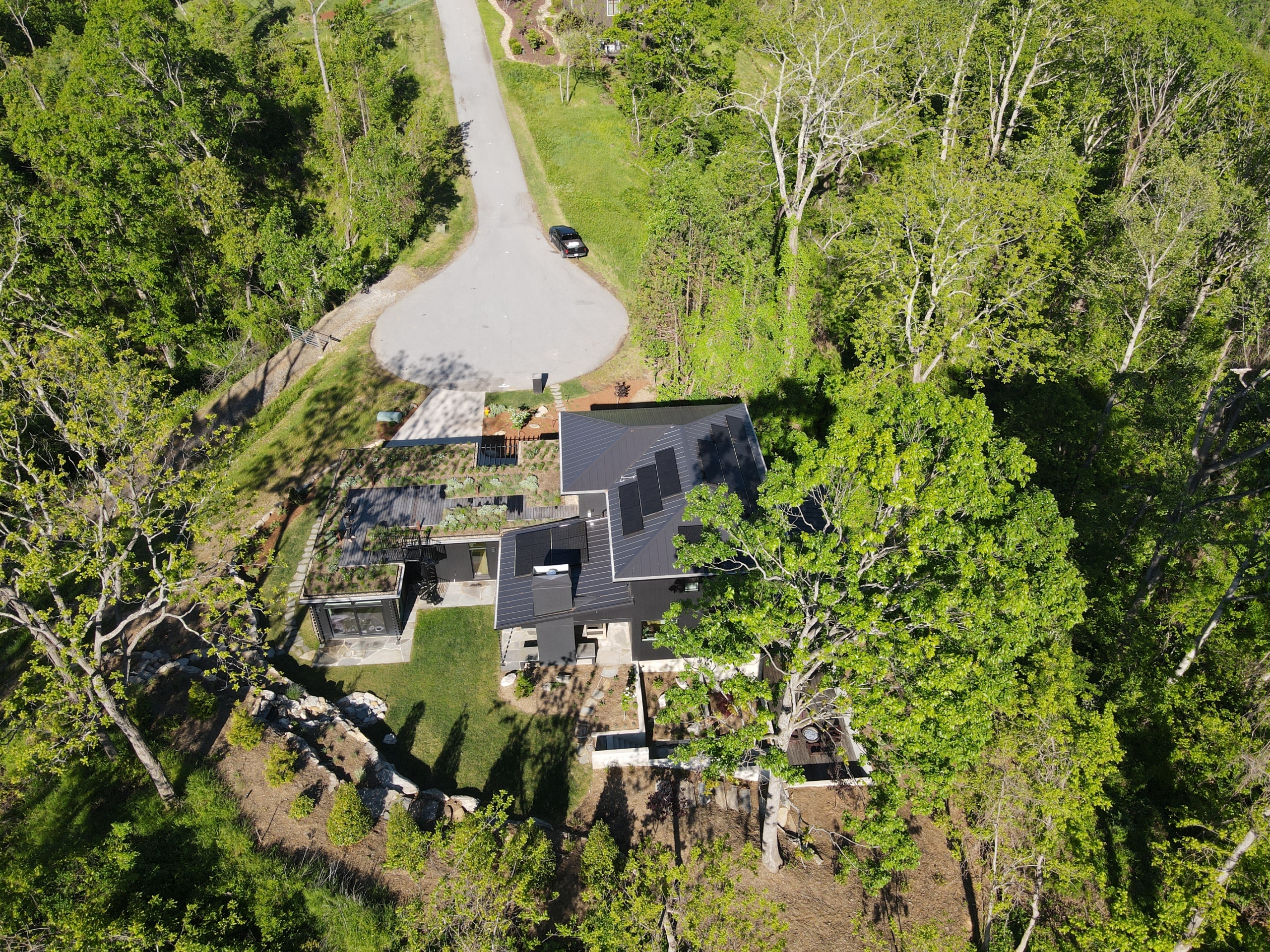
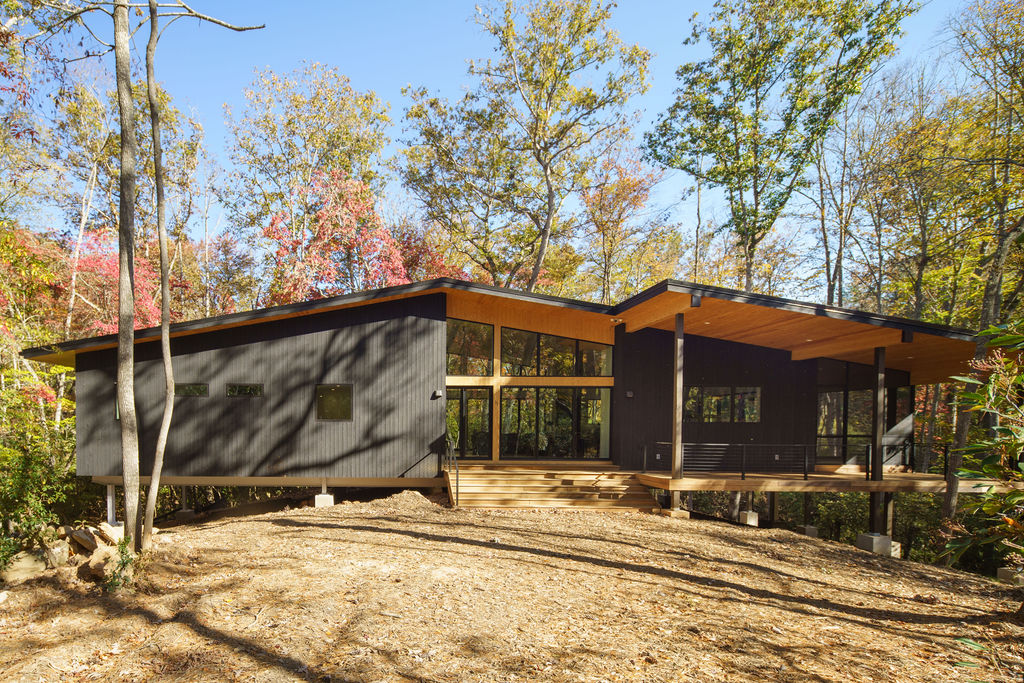
For sustainable custom homes, solar orientation is non-negotiable. South-facing slopes receive dramatically more solar exposure in Western NC’s mountain terrain, enabling passive solar design strategies that reduce heating loads, improve comfort, and lower long-term energy costs.
As architects working in Asheville’s design-build space, we always assess:
- The compass orientation of the lot’s primary buildable area
- Shading from neighboring ridges, hills, or mature trees
- Whether a south-facing façade with significant glazing is achievable
- Potential for solar panel installation (roof pitch and shading)
A lot with a north-facing slope, heavy tree canopy to the south, or a ridge blocking winter sun will work against energy efficiency from day one. It’s not impossible to build high-performance homes on these sites, but it requires more mechanical intervention and higher operating costs.
3. Soils and Geotechnical Conditions
Mountain soils in Western North Carolina are highly variable. Some parcels have stable, well-drained soils suitable for conventional foundations. Others have expansive clay, fill material from prior grading, high water tables, or shallow bedrock, all of which significantly affect foundation design and cost.
Before purchasing land, consider requesting a geotechnical investigation (soil test). This is especially important for:
- Lots that have been previously disturbed or graded
- Land adjacent to streams or low-lying areas
- Parcels with visible seeps, unusual vegetation patterns, or standing water
The cost of a soil test ($1,000–$3,000) is minor compared to discovering foundation surprises mid-project.
4. Utilities and Infrastructure Access
Not all parcels in Western North Carolina have access to public water and sewer. Many rural and semi-rural lots in the Asheville region rely on wells and septic systems, which are perfectly workable, but add to your upfront costs and your site plan complexity.
Key questions to answer before buying:
- Water: Is there a public water connection available? If not, has a well been drilled, or will you need to establish one? What is the estimated depth?
- Sewer: Is there access to a municipal sewer line, or will you need a septic system? Has the soil been tested for percolation (perc test)?
- Electricity: Is there a power line at the road, or will you need to run service to the site? Underground runs can be expensive on larger parcels.
- Driveway access: Does the parcel have road frontage, or does it require an easement across neighboring land?
In Buncombe County and surrounding areas, permit requirements for septic systems are specific and sometimes limiting: a lot that looks buildable on a map may not pass perc testing. This is a due diligence item that can make or break a land purchase.
5. Zoning, Setbacks, and Deed Restrictions
Western North Carolina has a patchwork of zoning jurisdictions. Parcels within the City of Asheville are subject to city zoning codes. Unincorporated Buncombe County has its own regulations. Neighboring counties (Henderson, Madison, Yancey, Haywood) each have their own rules, and some rural areas have minimal zoning at all.
Before purchasing, confirm:
- The parcel’s zoning classification and permitted uses
- Minimum lot size for a single-family residence
- Setbacks from property lines, roads, and streams (Asheville has specific riparian buffer requirements)
- Any deed restrictions or HOA covenants that limit design or materials
- Whether the lot is in a flood zone (FEMA flood map review)
- Regulations around accessory dwelling units (ADUs), if relevant to your plans
This is an area where working with Asheville architects who know the local regulatory environment pays dividends. Assembly AB has navigated Buncombe County and City of Asheville permitting on dozens of projects, and what’s allowable on paper doesn’t always translate cleanly to what’s buildable in practice.
6. Views, Privacy, and Neighboring Development
Finally: the experiential qualities that drew you to a piece of land in the first place. These matter, but evaluate them with clear eyes.
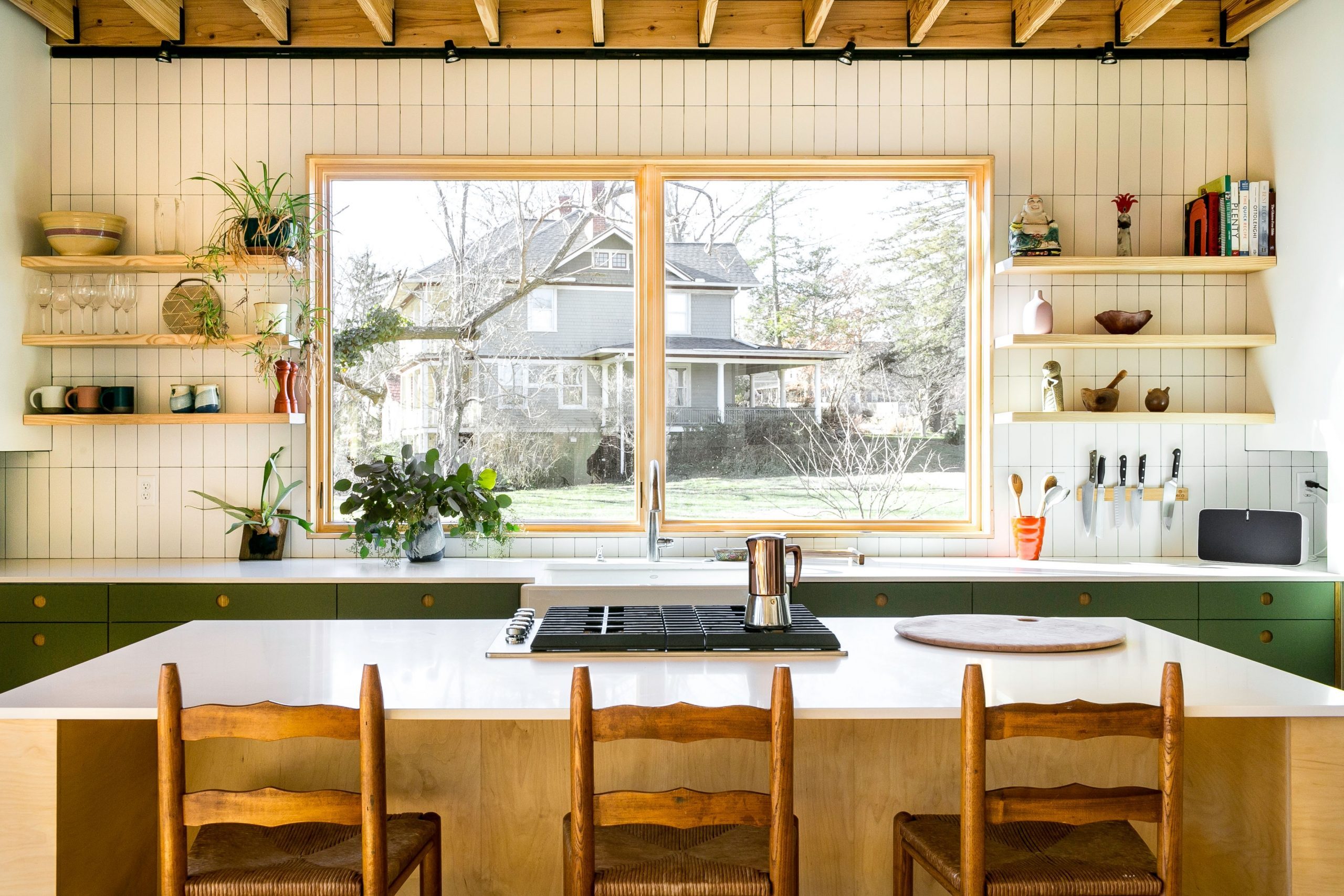
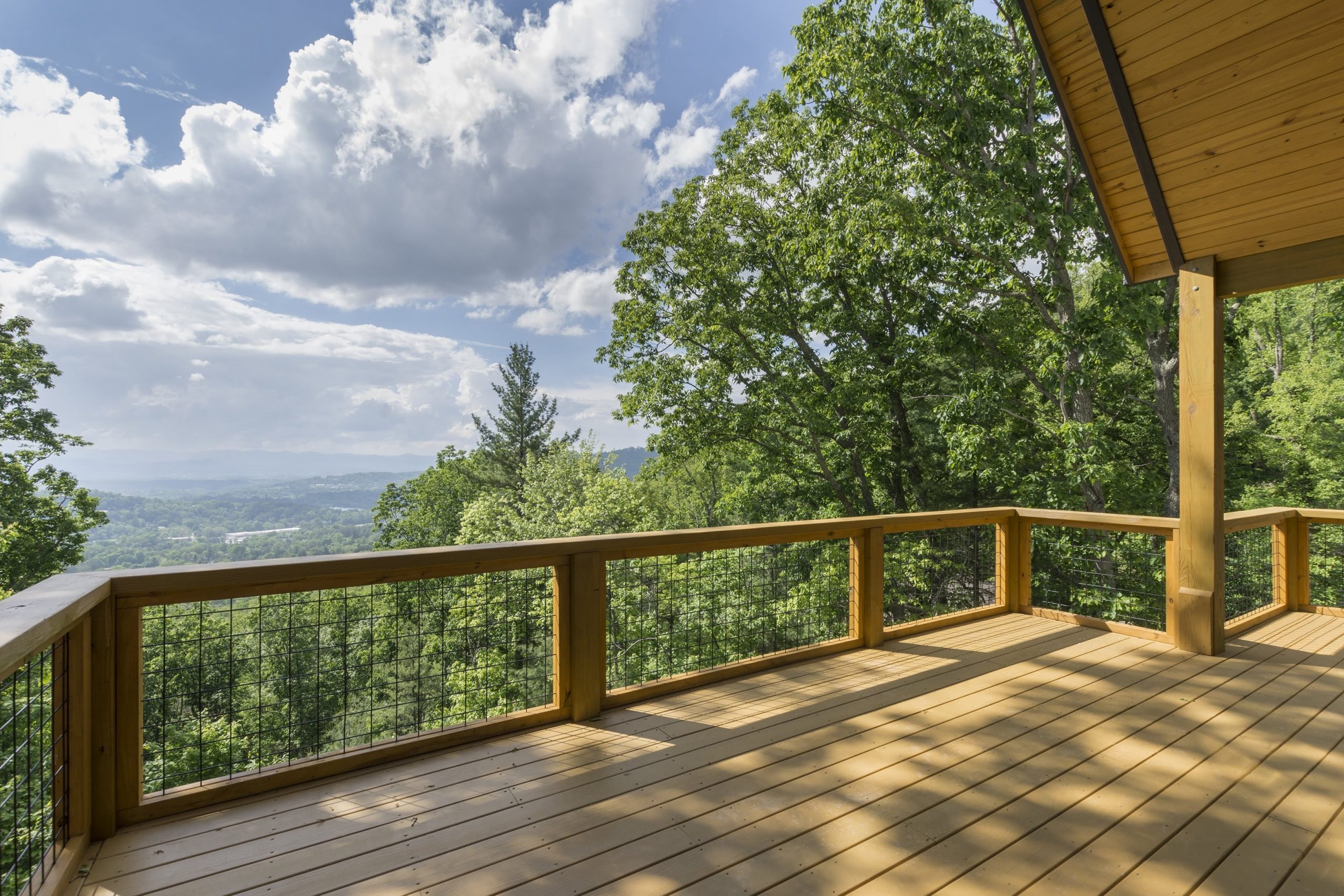
- Views: Are they protected, or could neighboring development block them? Check what’s buildable on adjacent parcels.
- Tree canopy: Mature hardwoods are beautiful and add value, but may need to be cleared for solar access, driveway construction, or the building footprint itself. Tree removal on steep mountain lots can be expensive.
- Noise and light: Proximity to roads, commercial areas, or other development affects livability in ways that are easy to overlook during a daytime site visit.
- Future neighbors: In growing areas like West Asheville, North Asheville, and the River Arts District adjacent communities, what’s undeveloped today may not be tomorrow.
What a Design-Build Firm Sees That You Might Not
One of the core advantages of working with a design-build firm like Assembly AB, rather than hiring an independent architect and contractor separately, is that site evaluations happen with both lenses at once.
Our architects think about solar orientation, views, how the house relates to the land, and how the design can respond to the site’s natural features. Our builders think about access for equipment, foundation complexity, site prep costs, and construction logistics. When both perspectives inform a pre-purchase evaluation, you get a much more complete picture of what a lot will actually cost and what kind of home it can support.
Oftentimes inspiration photos and designs customers bring us are designed for flat lots, because they are common in other parts of the US. In Asheville, the design will either need to be adapted for its slopes, grading is required, or a unique flat site will need to be located.
Areas We Commonly Build In
Assembly Architecture + Build designs and builds custom homes throughout the greater Asheville region and Western North Carolina, including:
- Asheville (West Asheville, North Asheville, South Slope, East Asheville)
- Black Mountain and Swannanoa Valley
- Weaverville and North Buncombe County
- Woodfin and the French Broad River corridor
- Marshall and Madison County
- Fairview and South Buncombe County
- Hendersonville and Henderson County
- Burnsville and Yancey County
Each of these areas has distinct terrain, soil conditions, utility infrastructure, and regulatory environments. If you’re evaluating land in any of these communities, we’re happy to provide a site consultation.
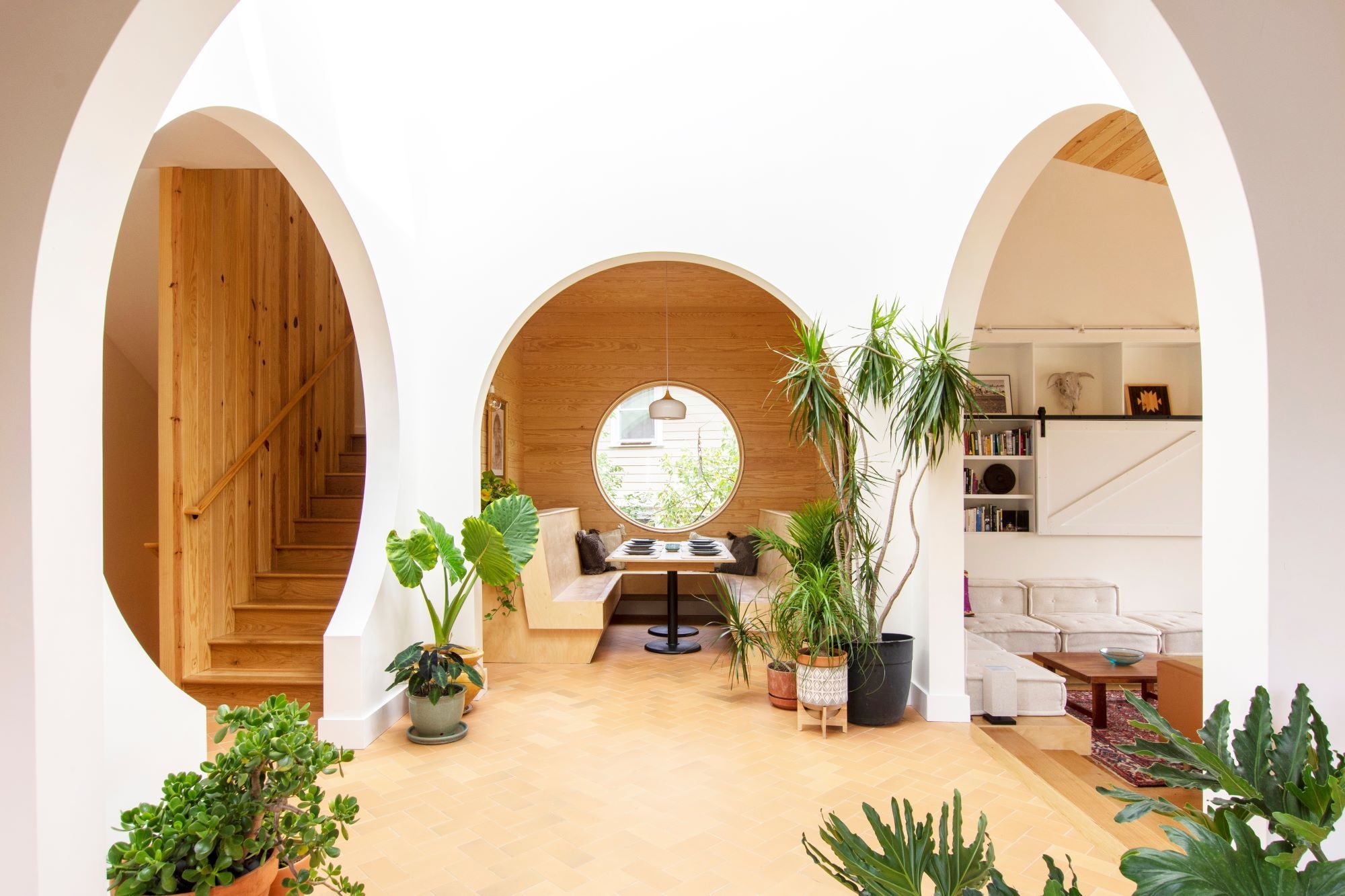
Inside a custom home we built in Asheville
Ready to Start Your Custom Home Journey in Western NC?
Choosing land is the first step. Designing and building a home that genuinely fits that land, sustainably, beautifully, and on budget, is where Assembly Architecture + Build comes in.
We’re a licensed architecture and contracting firm based in Asheville, NC, with a deep focus on sustainable design-build. Our integrated process means your architect and builder work as one team from the first site visit through the day you move in.
Book a Consultation with Assembly AB →
We serve Asheville, Black Mountain, and the greater Western North Carolina region.

Ross Smith is both a licensed architect and contractor and founder of ASSEMBLY Architecture + Build. Ross received his degree in architecture from Yale University where he graduated with an award in design excellence. He now designs and builds sustainable, unique custom homes in Asheville, NC.

